Kategoriat
Ajankohtaista

Explaining the Popularity of Pokémon Go (2016) through Nostalgia:
A Critical Review

augmented reality, domestication theory, mobile game, nostalgia

Jaakko Suominen
jaasuo [a] utu.fi
Ph.D., Professor of Digital Culture
University of Turku

How to cite: Suominen, Jaakko. 2025. ”Explaining the Popularity of Pokémon Go (2016) through Nostalgia: A Critical Review”. WiderScreen Ajankohtaista. https://widerscreen.fi/numerot/ajankohtaista/explaining-the-popularity-of-pokemon-go-2016-through-nostalgia-a-critical-review/

Printable PDF-version

Published originally in Finnish: Suominen, Jaakko. 2022. ”Pokémon Go (2016) -pelin suosion nostalgiaselittäminen.” WiderScreen 25 (1-2). https://widerscreen.fi/numerot/2022-1-2/pokemon-go-2016-pelin-suosion-nostalgiaselittaminen/

Nostalgia is a bittersweet feeling, characterized by the longing for past experiences or bygone eras. In this article, I discuss how media explained the popularity of the augmented reality game Pokémon Go within the frame of nostalgia when the game was launched in July 2016. I apply existing categorizations of nostalgia and present a diverse nostalgia-based explanations, including both simple and interpretive nostalgic explanations within the context of media culture. Nostalgia-based explanations are particularly apparent in popular media, as well as in expert discussions and research regarding the popularity and use of media products. In this article, I examine nostalgia-based explanations as a way through which institutional actors, such as media representatives and researchers, “tame” or domesticate understandings of new cultural products in interaction with users, integrating them into established practices. The article’s findings include research on Pokémon and nostalgia as well as news articles published in 2016–2017 concerning Pokémon Go.

Introduction

Allow me to set the scene if I may. It was July 2016 and I was cycling along the shores of Töölönlahti bay in Helsinki, Finland. I rode attentively, ready to dodge an angry barnacle goose mother as she herded her goslings across the bike path from one grassy area to another. Further, requiring my attention was the gaggle of wingless pedestrians filling the path along the shore.

I noticed an increasing number of these people gathering in group, engrossed in their mobile device screens, though I could not quite make out the details of what they were up to. People gazing at the mobile devices was hardly a new phenomenon in 2016, but now people were gathering in parks with something unusual on their minds. As it turned out, they were playing the new Pokémon Go game, which seemed to have taken over mobile screens quickly, in just a few days. Although it had not conquered all screens, millions of people worldwide were nonetheless playing it.

Video 1. A video from the American technology news site, The Verge, illustrates how the Pokémon Go game and its features were introduced to players and other interested parties immediately after its release, and highlights the safety concerns associated with gameplay: The Verge: Pokémon Go: everything you need to know in 9 minutes (July 13, 2016).

Why were so many people playing this new Pokémon game? What was it? As it turns out, Pokémon Go was an augmented reality game produced by Nintendo and developed by Niantic. The game was called an augmented reality game because it combined elements from the mobile screen with physical movement in the outside environment. News outlets reported on the game’s groundbreaking launch and sought explanations for its popularity. Journalists themselves pondered the reasons and also asked experts and players for explanations. On July 15, 2016, Helsingin Sanomat wrote about Kajsa Roslund, for whom the new game was—paradoxically—a journey back in time:

“Pokémon came on TV just when I started elementary school. I’m sure the game’s appeal lies in the chance to remember familiar characters from childhood. The most interesting are the original Pokémon that you can catch in the game,” says Roslund.

Pokémon games, cartoons, and trading cards reached the height of their popularity in the late 1990s. For children of that era, hunting Pikachu, Rattata, and other Pokémon characters is like a trip 15 years back in time.

“It’s funny to see people in their twenties wandering around downtown with their phones in hand,” Roslund says.

The game’s popularity, due to its important role in the childhood of many, was not the only explanation for the game’s success given in the news. Other explanations included the allure of new technology, the sense of community with other players, and the joy of combining physical activity with new media (for more on the connection between physical activity and gaming, see Turtiainen 2022, 207). But positive reminiscing, often simply referred to as nostalgia, seemed to set Pokémon Go’s success apart from the breakthrough of many other technological novelties. Typically, when new technologies were introduced, the media’s focus was on progress, enthusiasm for trying the novelty, or, sometimes critically, on potential threats such as increased surveillance, job loss, or the consequences of technological malfunctions (see e.g., Pantzar 1996; Suominen 2003).

I was particularly sensitive to the notion of explaining the game’s popularity through nostalgia because of my own research background. I had been studying the so-called retro gaming phenomenon, playing certain kinds of old video games and recycling related elements in consumer culture, since the early 2000s. My research explored the relationship between retro gaming and nostalgia, finding it complex and not necessarily reliant on nostalgia as its only driving force. (See e.g., Suominen 2008; Suominen 2011a; Suominen 2011b; Suominen, Reunanen & Remes 2015; Suominen & Vaahensalo 2019.)

Communication researcher Kristian Redhead Ahm (2020) also points out that instead of discussing retro gaming or nostalgia as the sole reason for return to earlier gaming experiences, we need a more nuanced classification of the relationships people have with old games. Redhead Ahm assigns technical-scientific definitions to these relationships. He refers to retro gaming enthusiasts as amateur archaeologists, amateur art historians, and techno-historians, depending on their areas of interest. He also distinguishes between historical gaming and nostalgic gaming. Historical gaming refers to an interest in the history of the medium, while nostalgic gaming is driven by an emotional connection to previous gaming experiences. Therefore, the relationship between playing Pokémon Go and nostalgia needs closer examination, even though the game was not a retro game at the time of its release but rather a new game that recycled some familiar elements.

The nostalgia-based explanation for Pokémon Go’s popularity, as presented in several popular news outlets, can be summarized as follows: the game held the highest appeal to those who had played the first Nintendo Pokémon games, collected Pokémon cards, and/or watched the Pokémon TV series in the 1990s. For them, the new game revived an emotional interest in the Pokémon theme and its familiar characters, assuming that interest had ever waned. In the news, the experience of nostalgia and retro gaming were sometimes conflated. This Finnish perspective wasn’t unique—similar nostalgia-based explanations were offered in news reports around the world (see e.g., New York Times July 14, 2016; Helahälsingland July 15, 2016; BBC News July 16, 2016). These explanations clearly reflected the temporal span and development of the Pokémon franchise, a vast cross-media phenomenon that digital culture researcher Johannes Koski (2017) names a ”huge transmedia entity” (see also Välisalo & Koskimaa 2022, 179).

In this article, I explore how media use is explained through nostalgia. The article is inspired by media scholar Anu Koivunen’s (2001) analysis of nostalgia, which emphasizes nostalgia’s performative nature—how it produces representations—and the need to study it as such. I interpret this as meaning that, in addition to examining “nostalgia products” such as games, movies, TV shows, or retro cars that evoke a longing for the past, we must also study the popular discourses—the ways of speaking—through which a product or activity is interpreted as nostalgic or explained using the vehicle of recollection. According to Koivunen, nostalgia is not an explanation but a question concerning the objects, their forms, meanings, and effects (Koivunen 2001, 345).

Media scholar Dominik Schrey (2017) has also emphasized the discursive nature of nostalgia. Schrey has studied a phenomenon he calls “analogue nostalgia in digital media culture.” Although Schrey does not mention Pokémon Go in his research, which for its part does not show direct signs of analogue nostalgia, the two are nonetheless connected through the aims of relating earlier media forms, which is referenced in digital products and related discussions. Schrey refers to analogue nostalgia in cases such as smartphone camera apps, which aim to recreate the look of older film cameras in photos and videos, with features like graininess, unevenness, and color imperfections. Even though modern technology enables clear and sharp images, users are also drawn to the possibility of replicating something that appears old—and nostalgic. Schrey divides analogue nostalgia into two forms: discursive and aesthetic. A discursive form refers to discussions, definitions, and explanations surrounding nostalgia, while the aesthetic form relates to applications and their outputs such as images that appear distinctly analogue within a digital environment. In this article, I will focus on discursive media nostalgia (for narrative and nostalgia, see Stewart 1993).
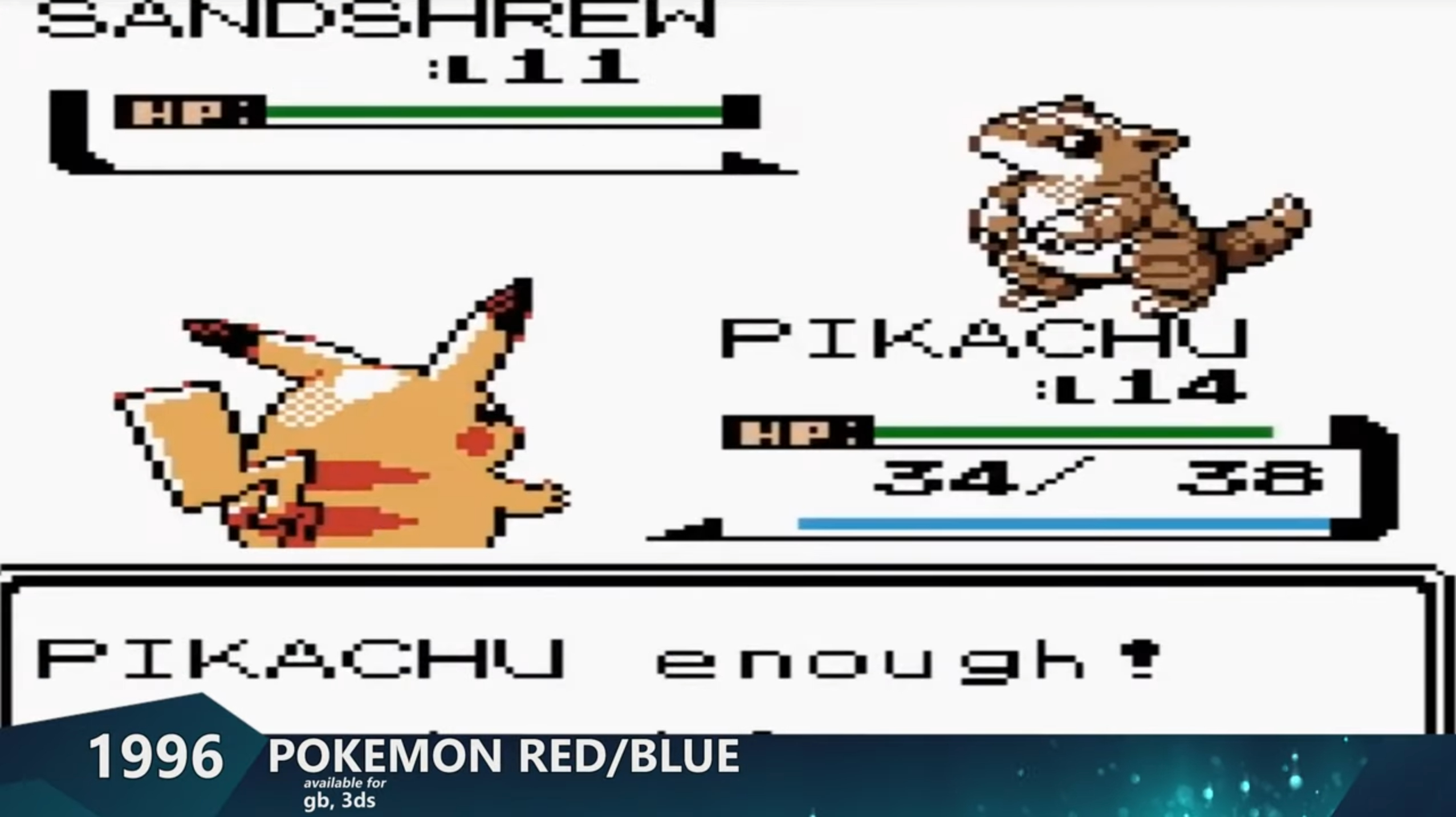
Video 2. “Evolution of Pokémon Games 1996–2020” is a YouTube video that presents one interpretation of the development and relationships between Pokémon games over time, structured like a timeline.

In this article, I will introduce the ways in which media phenomena are explained through nostalgia in news reports—and also in research texts. I will focus on the case of Pokémon Go and explore the role of nostalgia in the processes of adopting and domesticating new innovations. Through this, the article connects to this issue of WiderScreen’s theme of institutionalization.

The following article is largely based on previous nostalgia research and includes examples from Pokémon Go news articles from 2016–2017. However, the data is nonetheless incomplete and does not include all Pokémon Go news published during those years, nor is it based on a representative sample but on a random selection of Pokémon Go news stories. The research approach is, for its part, exploratory and searches for interpretative foundations and suggestions for quality research on nostalgia explanations (Elo & Kleemola 2016, 154–155). I have selectively drawn examples from the Finnish Broadcasting Company Yle’s website, broader web searches, and the digital Finnish news Sanoma archive using the keywords “Pokémon Go” and “nostalgia.” The Sanoma archive primarily contains news from Helsingin Sanomat, Ilta-Sanomat, and Taloussanomat from Finnish publishers. Helsingin Sanomat, it should be noted, is the largest newspaper in Finland.

The Sanoma archive contains 256 results for the search term ”Pokémon Go” from 2016 to 2017. When adding ”nostalgia” as a third search term, the results only produced 6 hits. This finding demonstrates that nostalgia is articulated very minimally within the overall number of Pokémon Go news articles, but the searched-news stories also referenced the onset of the Pokémon boom and referenced memories of earlier gaming experiences without directly mentioning nostalgia. However, instead of focusing on playing motives, the most common themes in early Pokémon Go articles from the Sanoma archive were related to Nintendo’s business success, game security issues, concerns caused by playing —especially in public spaces— and overall critiques of the game. It seems that the news themes and their quantities resemble those seen in news covering the success stories of Finnish digital gaming companies in the early 2000s. News about gaming often highlights economic and technological development more than the players themselves (Pasanen & Suominen 2021). While the argumentation in this article is based on selected samples and exploratory data analysis, the text is more theory-driven than data-driven (on the difference between theoretical and empirical research, see Töttö 2012, 57–58).

In the first section of this article, I will examine the relationship between the adoption and domestication theories of new technologies and nostalgia. In the second part, I will discuss how Pokémon Go was explained in Finland through nostalgia and other media frames. In the third section, I will provide a detailed overview of nostalgia research. Finally, in the fourth part, I will present a classification of the different manners through which nostalgia can explain media use.

Pokémon Go and Domestication Theory

Domestication theories address the processes through which new technologies become part of individual’s and communities’ everyday lives. These theories have been developed and applied since at least the 1980s in research on the everyday use of media, for example, examining the roles of television, radio, and computers in routine daily life. These theories have also been applied in many other fields, including both limited case analyses and broader generalizations that span multiple topics (e.g., Silverstone, Hirsch & Morley 1992; Pantzar 1996; Lie & Sørensen 1996; Lehtonen 2003; Morley 2003; Silverstone 2006; Haddon 2007). In more recent studies, domestication theories have been supplemented with additions to the concept such as classifications of new technology usage modes and reflections on reverse domestication—the ways in which types of media are abandoned (e.g., Haddon 2016; Karlsen & Syvertsen 2016; Brause & Blank 2020). Domestication theories can also be seen as part of a broader research tradition on the adoption of technological innovations (e.g., Hård & Jamison 2005).

When looking at Pokémon Go news and research texts through the lens of domestication theory, two interconnected approaches can be clearly identified. The first locates the news as part of a specific phase in the adoption of a new technology. The second examines the news and its changes over a longer period. In domestication theories, the adoption of new technology is most often described as a process with several phases. According to the domestication theory set out in Silverstone and Hirsch et al (1992), these phases include appropriation, objectification, incorporation, and conversion. Appropriation refers to the ways people make a general consumer product their own. Objectification involves a deeper integration of the new technology into everyday routines, while incorporation refers to ways the product is used in different temporal and spatial situations. Conversion, on the other hand, means how individuals’ specific ways of using and attributing meaning to products interact with the usage patterns and meanings of other products in everyday or public discussions and interactions (see also Silverstone 1994). Subsequently, this phase model has been developed in various ways, with phases and overlapping processes being described more complexly. However, it cannot be claimed that the phases of domestication follow each other linearly (e.g., Pantzar 1996, 124–130).

In many phase models and their applications, it is assumed that the adoption of a new technology may begin in the news and public discussion well before the new technology becomes established in everyday life. Mika Pantzar (1996, 125) has named this preliminary phase “dreaming;” whereby we begin to prepare for the arrival of new products even before we get our hands on them—if we ever do. News reporting can, therefore, precede the adoption of a new technology and create an imagined reality about its role in everyday life. People are given—and they create—advance notions about the significance of the new technology, how it relates to their current practices, and how it will change them. This type of speculative news reporting, which can also include descriptions from science fiction literature and films, has frequently accompanied the introduction of new information technologies. Popular news opinion-shaping has been central to the presentation of computers and robots long before they became common in households (Suominen 2003). Similarly, the rapid breakthrough of wearable computers, for example, Google’s smart glasses was discussed in many news stories, despite interest in smart glasses waning—at least for now—within a few years (Saariketo 2017).

The first perspective of domestication theories I described, therefore, relates to how (popular) public discussion precedes the adoption of a new technology in everyday life or engages with the early stages of adoption, such as the first weeks after the launch of Pokémon Go. For its part, the second perspective is more comprehensive, positing that the adoption of new technologies always includes a discursive dimension, which is a layer or element present in all stages of the adoption process (e.g., Hård & Jamison 2005, 14). The new technology being adopted, as well as the thereafter adopted technology, are constantly discussed in writing and conversation, but these discussions can evolve over time. The terminology surrounding the new technology becomes standardized, as do general conceptions of its usage modes, or these conceptions may shift to others. In a way, even if the adopted technology is no longer widely discussed, it is regardless a sign of the discursive dimension’s presence. This could be called discursive silence. Silence is characteristic of a quieter phase in the adoption process, which may end with a reassessment or, for example, the abandonment of the adopted technology. Discussions about the death or end of a product can activate the discursive dimension, so that what was once new is later viewed as former, discarded, or even as waste. Alternatively, the same product can also be viewed as something memorable and elevated as cultural heritage for a specific group or even an entire nation (cf. Sihvonen 2020 and the dormant phases of production processes).

It may seem contradictory to explain the adoption of new technology through nostalgia, as was done with Pokémon Go. However, this account of the Pokémon Go phenomenon also ties into typical modes of explaining new technologies. Even if the new technology is presented as different from the past, as revolutionary, and life-changing, it is nonetheless linked to the past through the naming or descriptions of its functions, so that people can understand what it is all about. I have definied this practice as the rhetoric or discourse of a “safe disruption” (Suominen 2003, 62).

Pokémon Go is a special case of the rhetoric of safe disruption. In this case, the connection between the new and the old may involve a break that specifically explains the experience of nostalgia. In the following section, I will look at how these connections are discussed.

Explaining Media Phenomena Through Nostalgia

Simply defined, nostalgia refers to a bittersweet longing for something from the past. According to literary scholars Riikka Rossi and Katja Seutu, nostalgia “has primarily been understood as a longing for a past, better time that brings pleasure and comfort, and as a return to memories” (Rossi & Seutu 2007, 8). The concept, coined in the 17th century by doctors to describe soldiers’ homesickness, originates from the Greek words nostos and algos. To briefly summarize, the concept gained new meanings in the late 18th and 19th centuries within the intellectual framework of Romanticism, shifting from homesickness to a broader longing for the past. In the 20th century, the focus of nostalgia began to shift towards phenomena related to modernization and consumer culture (Sallinen 2004, 81–85; Koivunen 2001, 326–327; see also Johannisson 2001; Batcho 2013; Vihma 2021). According to sociologist Anni Vilkko, the concept of nostalgia is “flexible and adapts to each socio-historical period” (Vilkko 2007, 14). However, the definition of nostalgia may become too flexible, losing its explanatory power as a result.

Anu Koivunen (2001, 324–325) has noted that when a new cultural phenomenon, such as a song, film, or TV show, needs an explanation for its notoriety or popularity, nostalgia becomes an appealing explanation. Nostalgia is often used to explain the appeal of a product in conjunction with the past. The product’s style can be defined as nostalgic, or its consumption may evoke a nostalgic experience. The consumer recognizes something familiar in a new product, either through past personal experiences or indirectly through phenomena preceding their time. In the case of Pokémon Go, the consumption experience was strongly nostalgic, especially for certain player groups. Collectively-defined nostalgia can also be understood as an institution to which nostalgic explanations are connected.

Koivunen emphasizes that as a rhetorical tool, a nostalgic explanation allows a specific phenomenon to be linked to broader societal and global changes. Within this nostalgic context, a product gains a meaning larger than itself. Through nostalgia, one can examine shifts such as modernization and globalization. Similarly, nostalgia is tied to generational experiences, with entire groups of people, of roughly the same age, relating to a product in similar ways. The person using nostalgia as an explanation—such as a journalist or art critic—can, according to Koivunen, either distance themselves from or identify with the subject and analyze it from multiple perspectives. These individuals may feel a sense of involvement or enthusiasm, or maintain a cooler, more analytical stance toward something they do not personally engage with. Koivunen adds that at its best, “the nostalgic explanation also strengthens the interpreter’s self-image as an intellectual of the postmodern and post-Marxist era, who not only analyzes popular culture phenomena but also does so empathetically and with understanding” (Koivunen 2001, 324–325).

An empathetic and understanding approach was also evident in the way Pokémon Go was written about following its release. Early on, this empathy and understanding did not manifest in the subjective voices of the journalists themselves but rather in how they gave voice to the enthusiastic players. Miikka Hujanen of Ilta-Sanomat wrote about “Pokémon mania” on July 15, 2016, in his interview Laura Takala, who had begun playing Pokémon Go as soon as it was released in the United States. Takala shared her long-time interest in Pokémon and described what made the new game different from the older ones. She spoke directly and excitedly to the journalist, creating a strong connection:

She [interviewee Laura Takala] still remembers the Pokémon craze of the early 2000s.
“Oh, let me tell you, it didn’t end at all. It’s been alive ever since,” she laughs.
Takala is fascinated by how the game rewards physical activity: for example, you can hatch Pokémon eggs by walking 10 kilometers. In just three days, she had walked about 50 kilometers.
“This is fantastic nostalgia, and it also encourages people to get moving. You really get to explore your own city.”

This quote illustrates how the word “nostalgia” is often used in comments and even framed as “fantastic,” but is not directly explained. However, players’ personal memories, the rediscovery of the past, or the continued enjoyment of something cherished are nonetheless emphasized.

In addition to players’ reflections, early expert comments also featured sparse accounts of nostalgia, which began appearing shortly after players were interviewed. The Finnish Broadcasting Company Yle interviewed media educator Tommi Tossavainen in an online news article published on July 21, 2016. According to Tossavainen, the appeal of Pokémon Go was based on the simplicity of the game and Pokémon’s strong, nostalgic brand from two decades ago. Tossavainen also linked retro elements to nostalgia, without further defining “retro”: “The game is easy to pick up, and retro elements could play a big role in its popularity” (Yle July 21, 2016).

Game researchers Zack Whalen and Laurie N. Taylor have suggested that when a game transitions from one platform to another, such as from a computer to a mobile phone, a nostalgic experience often arises. This feeling rises because players compare their new gameplay experience with the old one. Simultaneously, the new version “rewrites the memory of the original”, as players experience the old game through a new interface (Whalen & Taylor 2008, 9–10; see also Gazzard 2013). Playing Pokémon Go also represented a kind of rewriting of the old, even though the original game was not transferred as such to a new device. Rather, the Pokémon franchise, which appeared in other media, such as animated series and collectible cards, was adapted into an augmented reality game.

As mentioned earlier, nostalgia was typically one of many reasons for playing the game. For example, the magazine Talouselämä and STT news agency publication both highlighted nostalgia and other reasons for the game’s popularity in the headline of an article on July 20, 2016: “Nostalgia, community, and new technology drive people to try the Pokémon game.” In the article, an anonymous Helsinki-based player explained their excitement about the game by referring to nostalgia: “The main reason for getting excited about the game is that Pokémon is familiar. As a child of the 1990s, Pokémon brings back a sense of nostalgia.” (Talouselämä July 20, 2016; see also Iltalehti July 19, 2016).

While the connection between the past and the new was not immediate in Pokémon Go’s case, it became more prevalent later. Helsingin Sanomat examined Pokémon Go as part of a broader 1990s nostalgia trend a year later, in an article titled: “Ultra Bra [a band], Pokémon Go, Eurodance – Why does nostalgia seem to be everywhere now?” The nostalgia trend received a legitimate popular theoretical explanation, with sociologists and youth researchers Mikko Salasuo and Mikko Piispa emphasizing that the so-called Generation Y had reached a suitable age for reminiscing, following in the footsteps of previous generations.

In summary, the game’s rapid adoption was explained by its combination of something old, something new, and something borrowed—a familiar formula not only for wedding attire but also for the history of technology and new media (Paasonen 2000). As I mentioned when introducing domestication theories, novelty is easier to adopt when it contains something familiar to the user, which is combined with something imported from elsewhere, thereby adding value. The connection between the old and the new can be built in speech by naming the novelty in a familiar way or by describing the novelty more broadly in relation to phenomena and expectations that are already familiar. An article by Janne Simojoki, published on the website of the Vapa marketing agency on July 14, 2016, titled “5+1 Highlights from the Phenomenon Called Pokémon Go,” captured this blend of familiarity and novelty:

Pokémon Go fulfills a childhood fantasy. It’s familiar to anyone who once liked Pokémon: imagine being able to capture pocket monsters in real life! The handheld console version quickly takes a back seat when you can hunt cute little creatures on foot.

(Vapa Media, July 14, 2016.)

From Popular Explanations to Research and Interaction Processes

There were several reasons why the popular media’s explanation of nostalgia in this case was also linked to research on the subject. Either popular explanations influenced the research questions, or popular and academic interpretations coexisted and stabilized in constant mutual interaction. In any case, the popularity of Pokémon Go was quickly followed by a wave of research that studied gameplay through observation, surveys, and interviews. This research was an institutional effort to take control of the new phenomenon. Using empirical data, researchers demonstrated that nostalgia provided a motive for gameplay, at least for some players, or they referred to nostalgia without a clear empirical basis. However, studies rarely analyzed the nature of nostalgia in detail. Nostalgia was taken for granted and was not more precisely defined (for research on Pokémon Go users mentioning nostalgia, see Rasche, Scholmann & Mertens 2017; Yang & Liu 2017; Zsila et al. 2017; Alha et al. 2018; Hamari et al. 2018). This outcome has been typical of the treatment of the subject. Perhaps the reason was that the first studies appeared so quickly after the initial boom of Pokémon Go in a quest to provide quick answers for its popularity. Thus, there was not enough time for deeper cultural analysis, and the Pokémon Go phenomenon had not yet lasted long enough to gain distance. As a result, research articles were primarily based on player surveys.

Nostalgia themes were rarely discussed in studies analyzing the Pokémon Go game itself. There were some exceptions, such as Brendan Keogh’s (2017) article, which began by noting that one of the motivations for the development of the original Pokémon by creator Satoshi Tajiri was nostalgia. Tajiri associated nostalgia with his childhood adventures in rice fields and his collection of insects from the fields. According to Keogh, Pokémon Go players reenacted Tajiri’s original nostalgia by recalling the beginning of their own Pokémon hobby in the 1990s.

Another direction in the interaction between popular explanations and research was related to the Nintendo and Pokémon brands. In the Yle article I previously quoted, Tossavainen mentioned the impact of the brand factor. In research, brand themes appeared somewhat later compared to recognizing nostalgia as a reason for the popularity of playing the game. For example, David Harborth and Sebastian Pape published an article on Pokémon Go in 2020, in which they analyzed the game’s popularity through the concept of childhood brand nostalgia. Their aim was to complement the Technology Acceptance Model (TAM) and examine the role of childhood brand nostalgia in the adoption and acceptance of new mobile technology. (Harborth & Pape 2020.)

When discussing brands, we must remember the role of companies in deciding which products to bring back and which to leave in the past. Many researchers have noted that Nintendo, in particular, is one of the companies that uses its own history and various product brands, as well as players’ nostalgic feelings and other forms of engagement, by repeatedly reissuing and revamping its gallery of characters and products by re-releasing carefully selected older products. (Whalen & Taylor 2008, 1; Suominen 2012.) This is a phenomenon that game historian Alison Gazzard has called the “mask of nostalgia.” Only certain games and brands, such as Super Mario, Pac-Man, or Space Invaders, are kept alive and developed into product families, while others are not. (Gazzard 2013. See also Newman 2012.) The well-known nostalgia researcher, sociologist Fred Davis (1979, 132–138), has ironically and prophetically written about the “Nostalgia Exploitation Potential, NEP.” Davis predicted that companies could hire nostalgia experts who would identify this potential and select cultural products for reuse and reproduction. According to Davis, companies combine planned obsolescence and revivification in their operations (see also Sihvonen 2020). As a venerable company, Nintendo can be viewed as an institution that also institutionalizes its product brands, such as Pokémon. Thus, Nintendo is a nostalgia production institution.
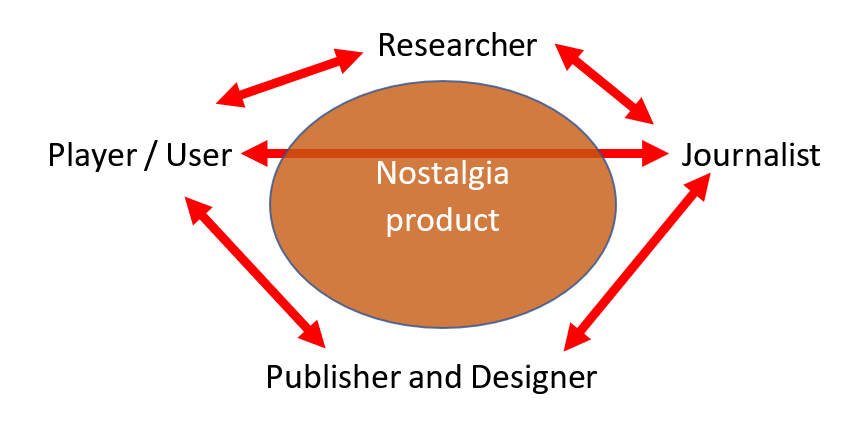
Figure 1. The participants in the interaction process of recognizing and explaining nostalgia.

The observations above show that the recognition of nostalgia and its explanation occur in interaction processes involving multiple parties: players, journalists, researchers, other experts, and product designers. The nostalgic explanation related to Pokémon Go—and a much more general nostalgic explanation—is either the player’s own interpretation or a motive for action defined by a journalist, researcher, or some other interpreter. Typically, the nostalgic explanation arises in a loop, whereby the interpreter assists the actor to understand their actions within the framework of nostalgia and vice versa. For example, a journalist or researcher suggests nostalgia to the player as a reason for playing because they themselves understand it as a hypothetical explanation by comparing the activity to similar past activities, either within the same media format or another, or by reflecting their own personal experiences in the new situation.
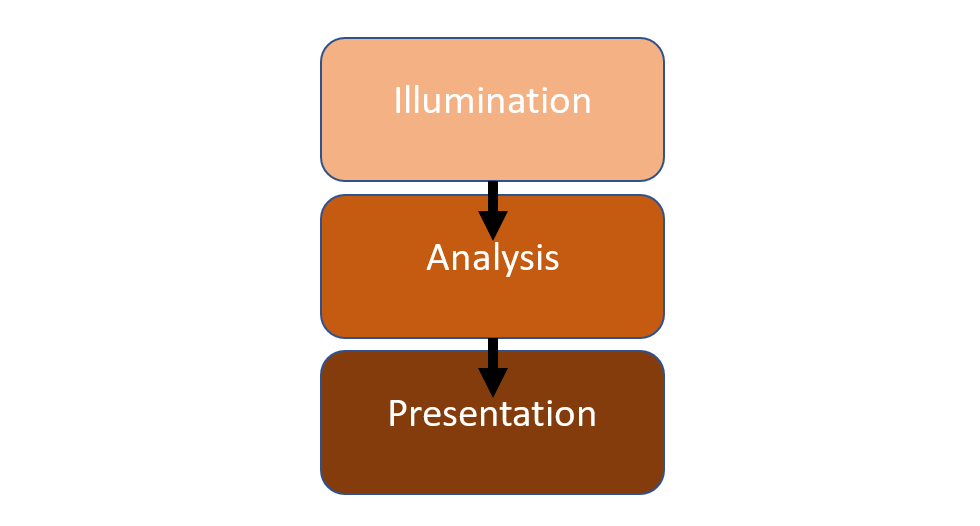
Figure 2. The three stages of the nostalgic remembering process according to Sallinen (2004).

The nostalgia loop can also be examined by dividing nostalgic experiences into phases, which is also comparable to the domestication processes of novelties. However, in this case, it is not about adopting something new but rather about recognizing something as familiar. Folklorist Susanna Sallinen (2004, 90–92) has distinguished three stages of the nostalgic remembering process in her analysis of Marcel Proust’s famous literary work on memory, In Search of Lost Time (À la recherche du temps perdu, 1913–1927). The nostalgic experience begins with illumination or awakening: a sensation, object, or stimulus, such as first encountering the Pokémon Go game, which triggers a rapid awakening of a memory. Then, gradually, the individual analyzes their memory and the feelings it has stirred by reasoning, using their consciousness, and reflecting on their previous experiences. After the analysis phase described above, the presentation phase occurs: the reminiscer works through the memory experience, giving into its final form and bequeathing it with artistic or creative expression.

Pokémon Go news articles reflect the interactive production of the phenomenon: both the interviewee and the journalist participate in the same three-phase process of illumination, analysis, and presentation. A third party, such as a researcher’s explanation, may also be involved in the same process. In this case, the illumination was the excitement of playing Pokémon Go and the connection to previously lived and experienced moments that arose during gameplay. The manufacturer of the new product embedded nostalgia potential into the gameplay by linking it to the Pokémon product family. The analysis relates to the fact that, for one reason or another, the player and the journalist compare the gameplay to the player’s previous activities and associations. The investigating journalist facilitates or enables the interviewee’s analysis of the nostalgia experience but may also base their interpretation on their own experiences. The third phase, presentation, is not an artwork in this case but a journalistic presentation in which the journalist gives the player’s memory experience in the form of a newspaper article. The presentations may also be Pokémon Go works produced by the players themselves, utilizing nostalgia, in which case a journalist is unnecessary as a facilitator or presenter.

Video 3. César Ramos’ YouTube video ”Pokémon Nostalgia” is a player-created video about longing for and remembering the original Pokémon games.

Types of Nostalgia Explanations

Is it even necessary to label certain players’ experiences with Pokémon Go as nostalgic? Could it simply be that they recognize the familiar Pokémon brand, but this recognition does not evoke any particular feeling of longing? Folklorist Seppo Knuuttila has written about the inflation of nostalgia and its renewed appreciation. According to Knuuttila, nostalgia has “followed a path similar to that of favorite concepts in research; it began to mean almost everything to which we have an emotional connection in the research texts of previous decades. Recently, the concept of nostalgia has returned to texts with more precise and limited meanings constructed from the past.” (Knuuttila 2007, 9. See also Davis 1979, 8.) Although Knuuttila states that nostalgia has returned as a more precise and limited concept, the same cannot be observed in popular texts discussing Pokémon Go or in many related studies. One can argue that in these texts, nostalgia is specifically referred to as a rather vague emotional connection or recognition tied to the product family.

In the previous sections, I have examined the interaction process in which nostalgia is produced as one explanation for the value of novelty. I have also referred to how popular nostalgia explanations vary in nature and scope. Next, I will clarify the typology of these explanations.

Today, perhaps the most well-known authority in nostalgia research is Svetlana Boym. In her 2001 work The Future of Nostalgia, she introduced a division between restorative and reflective nostalgia. Restorative nostalgia refers to actions aimed at recovering something longed for from the past. Reflective nostalgia, on the other hand, is more ironic in nature and understands that a return to a bygone era is impossible but nostalgia nonetheless thrives as it combines elements from the past and the present. (For restorative and reflective nostalgia in game design, see Garda 2013.) The nostalgia explanations related to playing Pokémon Go seem to lean more towards reflective nostalgia, whereby the familiar Pokémon brand is combined with new technology. On the other hand, one might ask whether the experience can be understood as imaginatively restorative: Pokémon Go enables a gaming experience that was originally desired. This is hinted at in a quote from the Vapa Media article dated July 14, 2016: “Pokémon Go fulfills a childhood fantasy. It is familiar to everyone who has ever liked Pokémon: if only pocket monsters could be caught in real life!”

Between restorative and reflective nostalgia, in his work Nostalgia: Theory and Practice (2021), Antto Vihma has discussed banal nostalgia, which has been inspired by Michael Billig’s concept of banal nationalism. With banal nostalgia, Vihma refers to everyday, moderate, and passive expressions and practices of nostalgia. In his analysis, banal nostalgia is specifically related to consumer culture and the more rapid and broader recycling and dissemination of nostalgic products, which has enabled by digitalization, as well as the earlier longing caused by technological change. Vihma specifically refers to the interpretations of nostalgia by sociologist Fred Davis and postmodern theorist Fredric Jameson in the context of discussing banal nostalgia. (Vihma 2021, esp. 11, 195–196, 222–238.) In Vihma’s classification, Pokémon Go, and most of the nostalgia explanations related to it, can be placed in the category of banal nostalgia.

Less frequently than Boym’s classification, researchers highlight Fred Davis’s (1979, 16–29) division (see also Korkiakangas 1999). This division is not based as much on action but rather on the memoirist’s own interpretation of the subject of their recollection, which may lead to actions or products. First, Davis discusses simple nostalgia, which means the idea that things were better in the past. For Davis, reflexive [or reflective] nostalgia is a thought process where a person begins to ponder whether things were actually better before. The third level is interpretive nostalgia, where a person considers why they regard certain past times, events, or products as better than present ones. Davis emphasizes that all levels can coexist simultaneously and should not be viewed as developmental stages with the aim of achieving a higher level of analytical nostalgia.

Davis’s classification can be applied to the categorization of the popular Pokémon Go news. I have noted that most early news articles about the game merely mentioned nostalgia without further pondering its nature. The explanations presented therein could thus be called simple nostalgia explanations. A simple nostalgia explanation refers to the label provided in popular news that explains the actions of individual media users. This label may be associated with a longing for previous media use for a number of reasons. Typically, a simple explanation does not define nostalgia and can be passed over quite quickly as one explanation among many. The reason for a simple nostalgia explanation is that the emotional reaction to the product is named, often unconsciously, in a way that links the emotional reaction to other media and popular culture products. In the context of Pokémon, references may also be made to brands like Lego and Star Wars, which also leverage nostalgia to some extent:

The enrichment from gaming craze is just beginning. Pokémon even challenges Star Wars, whose brand Disney revitalized last year with tremendous success. Around Christmas, Disney will release a new Star Wars film, but likely the top-selling products in toy stores this year will be Pokémon. On Western toy shelves, the only weakness of Pokémon is that they are not yet available in Lego form. Both Pokémon, born in the 1990s, and Star Wars, born in the 1970s, are profiting from nostalgia.

(Helsingin Sanomat, July 20, 2016)

Some popular nostalgia explanations have been far from simple. Following Davis, they could be called interpretive nostalgia explanations but the nature of interpretation is different from that in Davis’s classification. Interpretive nostalgia explanations are rarer in Pokémon Go news than simple descriptions as they reflect broader contemplation of nostalgia in relation to the spirit of the times that encourages nostalgic feelings or about generational experiences in which individuals of a certain age yearn for various familiar aspects of their childhood and youth. This yearning can be commercialized by launching several different products that people wish to consume. Interpretive nostalgia explanations can be divided into general explanations (e.g., the spirit of the times or shared generational experience) or specific explanations in situations where the aim is to analyze more precisely the meanings attributed by individuals to their nostalgic product relationships or categorize nostalgic experiences and functionalities into different categories. The division between simple and interpretive nostalgia explanations is not precise, as the examples cited in this article also demonstrate how even short references to nostalgia begin to position the experience of nostalgia as a feeling shared by gaming enthusiasts of approximately the same age.

Simple Nostalgia ExplanationsInterpretive Nostalgia Explanations
A product experience is labeled as nostalgic without further specification, usually immediately after the novelty has risen to popularity.Includes generalizing or specifying accounts that aim to describe in more detail the nature of the nostalgic product experience, to define its experiencers, and to provide reasons for its nostalgic quality. Interpretive explanations of nostalgia usually require temporal or other forms of distance from the object of interpretation.
Table 1. Two Basic Types of Nostalgia Explanations.

However, interpretive nostalgia explanations typically articulate generalizations in popular news and do not make precise distinctions. Generally, interpretive explanations require more temporal or other distancing from their subject. There is no longer that much daily journalism in which players or other actors are interviewed, for instance, immediately after the novelty’s introduction.

I will return to the relationship between nostalgia explanations and domestication theory below. Theories of domestication are generally used to analyze how media-technological and other novelties become part of everyday life through several phases or experiments. However, this article raises the question of what constitutes novelty. If the success of a product is explained through nostalgia, is it ultimately something other than novelty, or is it not at least at the beginning of the domestication process rather than in the middle of it? Another option is to consider that in many domestication or assimilation processes of novelties, it is essential to recognize, from the very beginning, through public discourse that the novelty actually contains much that is already known—albeit possibly forgotten—which makes the adoption of new elements easier and more desirable. Existing institutions such as media outlets support this way of thinking. Similarly, such thinking is supported by institutions, for example long-established companies and their utilized long-standing brands, which can also be viewed as institutions. In these situations, nostalgia fits precisely into the marketing toolkit of their operations and products.

In conclusion: nostalgia explanations as interaction processes

Nostalgia is an emotional term that is often used vaguely. Especially in news texts, people’s reactions to various cultural products can be explained by nostalgia without further consideration of whether it truly involves nostalgia or how nostalgia is actually defined. In this article, following Anu Koivunen’s (2001) analysis of popular culture, I have referred to one explanation for the popularity of the Pokémon Go game, which appeared in the news, as a nostalgic explanation. I have noted that nostalgic explanations are also apparent in the research texts that began to emerge soon after the release of Pokémon Go and aimed to explore the reasons behind the game’s popularity and players’ motivations, particularly through survey data. I have emphasized that nostalgic explanations arise from an interaction process involving multiple parties, such as the journalist, the user of the cultural product, the researcher, and the product’s creator. Nostalgic explanations are varied in nature, ranging from simple explanations to more interpretive ones.

Nostalgic explanations are not solely related to the rediscovery and use of old products and phenomena. They are also a key part of the cultural adoption process of many new products. Some products are consciously designed to be purely nostalgic, while others are hybrid products like Pokémon Go. In these cases, nostalgia operates alongside many other motivational factors. A nostalgic explanation is an accepted way to describe a person’s emotional connection to an object that links its user or audience to something previously experienced. Through nostalgic explanations, new products are connected to a broader category of similar products, which allows even those who recognize nostalgic experiences from other products to understand the current novelty.

Nostalgia can explain media usage in many ways. However, rather than relying on a single simple nostalgic explanation, multiple explanations and various categorizations of nostalgic experiences and actions are typically needed. It is also essential to understand that nostalgia is not the only explanation when examining why, for example, a user returns to previous media forms or content, or to those products that resemble or imitate them (see also Readhead Ahm 2020). The reasons for playing old games may include habits, curiosity, historical interest, following trends, a desire to stand out, or even a wish to preserve. Further research into these reasons is necessary to answer these questions.

Finally, it would be important to more closely investigate what players factually mean when they discuss nostalgia and how this articulated nostalgia connects to various modes of play and activity. It is also necessary to further explore the interaction process through which nostalgic discourse is constructed and transformed in the different phases of product adoption. Nostalgic discourse is constructed in relation to existing institutions, for example established product brands or companies that actively leverage the nostalgic potential of their products, including memory organizations that use nostalgia as a theme to reach audiences for their exhibitions.

Acknowledgments

I would like to thank the editors of this special issue and the anonymous reviewers for their comments. This research has been conducted as part of the Centre of Excellence in Game Culture Studies, funded by the Research Council of Finland (grant decision no. 312396).

Sources

All links verified 25.11.2025. 

Newspapers and online sources

BBC News 16.7.2016, Pokemon and the power of nostalgia. https://www.bbc.com/news/world-asia-36780797.

Helahälsingland 15.7.2016, Madeleine Andersson: Pokémon Go-entusiasterna från Söderhamn:”Nu lever vi barndomsdrömmen”. https://www.helahalsingland.se/2016-07-15/pokemon-go-entusiasterna-fran-soderhamnnu-lever-vi-barndomsdrommen [Link no longer active].

Helsingin Sanomat 15.7.2016, Juuso Määttänen & Jussi Pullinen: Metsästäjät etsivät otuksia Esplanadilta.

Helsingin Sanomat 20.7.2016, Karoliina Liimatainen: Rikastuminen pelivillityksellä on vasta alussa.

Helsingin Sanomat 22.7.2016, Juuso Määttänen & Jussi Pullinen: Pokémon Gosta tuli jättivillitys maailmalla.

Helsingin Sanomat 15.8.2017, Anu-Elina Ervasti: Ultra Bra, Pokémon Go, eurodance – Miksi nostalgia tuntuu olevan nyt kaikkialla? Menneestä haetaan tunteita ja aitoutta, tutkija kertoo.

Iltalehti 19.7.2016, Jenna Lehtonen: Suosikin entinen päätoimittaja kehitti Pokémon GO:n kaltaisen mobiilipelin jo vuosia sitten. http://www.iltalehti.fi/digi/2016071821927490_du.shtml.

Ilta-Sanomat 15.7.2016, Miikka Hujanen: Pokémon-mania!

Ilta-Sanomat/Digitoday 13.7.2016, Miikka Hujanen: Kuumin sovellus juuri nyt! Uusi kännykkäpeli saa nuoret ryntäilemään kaduille Suomessakin. https://web.archive.org/web/20160713095919/http://www.iltasanomat.fi/digi/art-2000001219129.html.

New York Times 14.7.2016, Quentin Hardy: Pokémon Go, Millennials’ First Nostalgia Blast. https://www.nytimes.com/2016/07/14/technology/pokemon-go-millennials-first-nostalgia-blast.html.

Radio Kuopio 18.7.2016. http://www.radiokuopio.fi/uutiset/nostalgian-kaipuu-sai-nuoret-aikuiset-kaduille-Pokémon-kouluttajia-vilisee-myos-kuopiossa [Link no longer active].

Talouselämä 20.7.2016, Nostalgia, yhteisöllisyys ja uusi teknologia innostavat kokeilemaan Pokémon-peliä. http://www.talouselama.fi/uutiset/nostalgia-yhteisollisyys-ja-uusi-teknologia-innostavat-kokeilemaan-Pokémon-pelia-6567817.

Vapa Media 14.7.2016, Janne Simojoki: 5+1 nostoa ilmiöstä nimeltä Pokémon Go. https://www.vapamedia.fi/2016/07/14/viisi-yksi-nostoa-ilmiosta-nimelta-pokemon-go/ [Link no longer active].

Yle uutiset 21.7.2016, Katariina Poranen: Peli-ilmiö voi kantaa kestosuosikiksi – ”Pokémon Go tulee ehkä suositummaksi kuin geokätköily”. https://yle.fi/uutiset/3-9038188.

Literature

Alha, Kati, Elina Koskinen, Janne Paavilainen & Juho Hamari. 2018. “Why Do People Play Location-Based Augmented Reality Games: A Study on Pokémon GO.” Computers in Human Behavior 93, 114–122. https://doi.org/10.1016/j.chb.2018.12.008.

Batcho, Krystine Irene. 2013. ”Nostalgia: The bittersweet history of a psychological concept.” History of Psychology 16(3), 165–176.

Boym, Svetlana. 2001. The Future of Nostalgia. New York: Basic Books.

Brause, Saba Rebecca & Grant Blank. 2020. ”Externalized domestication: smart speaker assistants, networks and domestication theory.” Information, Communication & Society 23(5), 751-763. DOI: 10.1080/1369118X.2020.1713845.

Davis, Fred. 1979. Yearning for Yesterday. A Sociology of Nostalgia. New York: The Free Press.

Elo, Kimmo & Olli Kleemola. 2016. “SA-kuva-arkistoa louhimassa – digitaaliset tutkimusmenetelmät valokuvatutkimuksen tukena.” In Kimmo Elo (ed.) Digitaalinen humanismi ja historiatieteet. Historia mirabilis 12. Turku: Turun Historiallinen Yhdistys, 151–190.

Garda, Maria. 2013. “Nostalgia in Retro Game Design.” DiGRA ’13 – Proceedings of the 2013 DiGRA International Conference: DeFragging Game Studies. DiGRA Digital Library. http://www.digra.org/digital-library/publications/nostalgia-in-retro-game-design/.

Gazzard, Alison. 2013. “The Platform and the Player: exploring the (hi)stories of Elite.” Game Studies13(2). http://gamestudies.org/1302/articles/agazzard.

Grönholm, Pertti & Heli Paalumäki. 2015. “Nostalgian ja utopian risteyksessä.” In Kaipaava moderni. Nostalgian ja utopian kohtaamisia 1600-luvulta 2000-luvulle. Historia Mirabilis 11. Turku: Turun Historiallinen Yhdistys, 9–38.

Haddon, Leslie. 2007. “Roger Silverstone’s Legacies: Domestication.” New Media and Society 9, 16–24.

Haddon, Leslie. 2016. “Domestication and the Media.” In Patrick Rössler (ed.) The International Encyclopedia about Media Effects. John Wiley and Sons, London, Vol.1, 409–417. http://eprints.lse.ac.uk/64848/.

Hamari, Juho, Agdas Malik, Johannes Koski & Aditya Johri. 2018. ”Uses and gratifications in Pokémon Go: Why do people play mobile location-based augmented reality games?” International Journal of Human–Computer Interaction 35(9), 804–819. https://doi.org/10.1080/10447318.2018.1497115.

Harborth, David & Sebastian Pape. 2020. “How nostalgic feelings impact Pokémon Go players – integrating childhood brand nostalgia into the technology acceptance theory.” Behaviour & Information Technology 39(12), 1276–1296. https://doi.org/10.1080/0144929X.2019.1662486.

Hård, Mikael & Andrew Jamison. 2005. Hubris and Hybrids. A Cultural History of Technology and Science. New York: Routledge.

Johannisson, Karin. 2001. Nostalgia. En känslans historia. Stockholm: Albert Bonniers förlag.

Karlsen, Faltin & Trine Syvertsen. 2016. ”You can’t smell roses online: Intruding media and reverse domestication.” Nordicom review 37(1), 25–39. https://doi.org/10.1515/nor-2016-0021.

Keogh, Brendan. 2017. ”Pokémon GO, the novelty of nostalgia, and the ubiquity of the smartphone.” Mobile Media & Communication 5(1), 38–41.

Knuuttila, Seppo. 2007. ”Epätarkka menneisyys.” In Seppo Knuuttila & Ulla Piela (eds.) Menneisyys on toista maata. Kalevalaseuran vuosikirja 86. Helsinki: Kalevalaseura, 7–10.

Koivunen, Anu. 2001. ”Takaisin kotiin? Nostalgiaselityksen lumo ja ongelmallisuus.” In Anu Koivunen, Susanna Paasonen & Mari Pajala (eds.) Populaarin lumo – mediat ja arki. Toinen, korjattu painos. Taiteiden tutkimuksen laitos, mediatutkimus, julkaisuja A:46. Turku: Turun yliopisto, 324–350.

Korkiakangas, Pirjo. 1999. ”Muisti, muistelu, perinne.” In Bo Lönnqvist, Elina Kiuru & Eeva Uusitalo (eds.) Kulttuurin muuttuvat kasvot. Johdatusta etnologiatieteisiin. Tietolipas 155. Helsinki: SKS.

Koski, Johannes. 2017. ”Pokémon tutkimuskohteena: tuoteperheen ja tutkimuksen aallot.” In Raine Koskimaa, Jonne Arjoranta, Usva Friman, Frans Mäyrä, Olli Sotamaa & Jaakko Suominen (eds.) Pelitutkimuksen vuosikirja 2017. Tampere: Tampereen yliopiston. https://www.pelitutkimus.fi/vuosikirja2017/pokemon-tutkimuskohteena-tuoteperheen-ja-tutkimuksen-aallot.

Lehtonen, Turo-Kimmo. 2003. “The Domestication of New Technologies as a Set of Trials.” Journal of Consumer Culture 3(3), 363–385.

Lie, Merete & Knut H. Sørensen (Eds.). 1996. Making Technology Our Own? Domesticating Technology into Everyday Life. Oslo, Oxford, and Boston: Scandinavian University Press.

Morley, David. 2003. “What’s ’Home’ got to do with it? Contradictory Dynamics in the Domestication of Technology and the Dislocation of Domesticity.” European Journal of Cultural Studies 6(4), 435–458.

Newman, James. 2012. Best Before: Videogames, Supersession and Obsolescence. London: Routledge.

Paasonen, Susanna. 2001. ”Jotain uutta, jotain vanhaa ja jotain lainattua: www-sivut kuvallisena esitysmuotona.” In Hannu Nieminen & Jukka Sihvonen (eds.) Mediatutkimus – näkökulmia ja kartoituksia. Turun yliopiston taiteiden tutkimuksen laitoksen julkaisuja, Sarja A, no 47, 2001, 101–132.

Pantzar, Mika. 1996. Kuinka teknologia kesytetään. Kulutuksen tieteestä kulutuksen taiteeseen. Helsinki: Hanki ja jää.

Pasanen, Tero & Jaakko Suominen. 2021. ”Demoryhmästä pörssiyhtiöksi: Remedyn menestystarinan kehystys sanoma- ja pelilehdistössä 1997–2019.” Media & Viestintä 44(1),116–137. https://doi.org/10.23983/mv.107303.

Rasche, Peter, Anna Schlomann & Alexander Mertens. 2017. ”Who is still playing Pokémon Go? A web- based survey.” JMIR Serious Games 5(2). https://games.jmir.org/2017/2/e7.

Redhead Ahm, Kristian. 2020. “(Re)Playing (with) Video Game History: Moving beyond Retrogaming.” Games and Culture, (September 2020). https://doi.org/10.1177/1555412020955084.

Rossi, Riikka & Katja Seutu (eds.) 2007. Nostalgia. Kirjoituksia kaipuusta, ikävästä ja muistista. Suomalaisen Kirjallisuuden Seuran toimituksia 1137. Helsinki: SKS.

Saariketo, Minna. 2017. ”Älylasit tutuksi: Mediateknisten laitteiden kotoistaminen uutisissa.” WiderScreen 1-2/2017. http://widerscreen.fi/numerot/2017-1-2/alylasit-tutuksi-mediateknisten-laitteiden-kotoistaminen-uutisissa/.

Sallinen, Susanna. 2004. ”Koti-ikävä ja nostalgia arjen kokemuksena.” In Päivi Granö, Jaakko Suominen & Outi Tuomi-Nikula (eds.) Koti. Kaiho, paikka, muutos. Kulttuurituotannon ja maisemantutkimuksen laitoksen julkaisuja 4. Pori: Turun yliopisto, 79–102.

Schrey, Dominik. 2017. Analoge Nostalgie in der digitalen Mediekultur. Berlin: Kulturverlag Kadmos.

Sihvonen, Lilli. 2020. “’Classics Age’ – The Flexibility of Planned Obsolescence in Terms of the Classic Finnish Board Game Kimble.” WiderScreen 14.10.2020. http://widerscreen.fi/numerot/ajankohtaista/classics-age-the-flexibility-of-planned-obsolescence-in-terms-of-the-classic-finnish-board-game-kimble/.

Silverstone, Roger. 2006. “Domesticating domestication. Reflections on the life of a concept.” In Thomas Berker, Maren Hartmann & Yves Punie (eds.) Domestication of media and technology. Maidenhead: Open University Press, 229–248.

Silverstone, Roger, Eric Hirsch & David Morley. 1992. “Information and communication technologies and the moral economy of the household.” In Roger Silverstone & Eric Hirsch (eds.) Consuming technologies: media and information in domestic spaces. London: Routledge, 15–31.

Silverstone, Roger. 1994. Television and Everyday Life. London and New York: Routledge.

Stewart, Susan. 1993. On Longing. Narratives of the Miniature, the Gigantic, the Souvenir, the Collection. Durham and London: Duke University Press.

Suominen, Jaakko. 2003. Koneen kokemus. Tietoteknistyvä kulttuuri modernisoituvassa Suomessa 1920-luvulta 1970-luvulle. Tampere: Vastapaino.

Suominen, Jaakko. 2008. “The Past as the Future? Nostalgia and Retrogaming in Digital Culture.” Fibreculture, issue 11 (digital arts and culture conference (perth) issue), 2008. http://journal.fibreculture.org/issue11/issue11_suominen.html.

Suominen, Jaakko. 2011a. “Pac-Man kaihon kohteena ja kokeilujen välineenä: luovasta aikalaisadaptaatiosta reflektiiviseen nostalgiaan.” WiderScreen 1-2/2011. http://www.widerscreen.fi/2011-1-2/pac-man-kaihon-kohteena-ja-kokeilujen-valineena/.

Suominen, Jaakko. 2011b. ”Retropelaamista tutkimassa – välitilinpäätös.” In Jaakko Suominen, Raine Koskimaa, Frans Mäyrä, Olli Sotamaa & Riikka Turtiainen (eds.) Pelitutkimuksen vuosikirja 2011. Tampere: Tampereen yliopisto, 73–81. http://www.pelitutkimus.fi/vuosikirja2011/ptvk2011-08.pdf.

Suominen, Jaakko. 2012. “Mario’s legacy and Sonic’s heritage: Replays and refunds of console gaming history.” In Raine Koskimaa, Frans Mäyrä & Jaakko Suominen (eds.) Proceedings of DiGRA Nordic 2012. Tampere: University of Tampere. DiGRA Digital Library. https://dl.digra.org/index.php/dl/article/view/623

Suominen, Jaakko, Markku Reunanen & Sami Remes. 2015. ”Return in Play: The Emergence of Retrogaming in Finnish Computer Hobbyist and Game Magazines from the 1980s to the 2000s.” Kinephanos – Canadian Journal of Media Studies.

Suominen, Jaakko & Elina Vaahensalo. 2019. Current Trends in Retro Gaming Research. EasyChair Preprint no. 1094. https://easychair.org/publications/preprint/kjjf.

Turtiainen, Riikka. 2022. ”Liikunta, urheilu ja pelaaminen.” In Usva Friman, Jonne Arjoranta, Jani Kinnunen, Katriina Heljakka & Jaakko Stenros (eds.) Pelit kulttuurina. Tampere: Vastapaino, 197–217.

Töttö, Pertti. 2012. Paljonko on paljon? Luvuilla argumentoinnista empiirisessä tutkimuksessa. Tampere: Vastapaino.

Whalen, Zach & Laurie N. Taylor (eds.). 2008. Playing the Past. History and Nostalgia in Video Games. Nashville: Vanderbilt University Press.

Vihma, Antto. 2021. Nostalgia: teoria ja käytäntö. Helsinki: Teos.

Vilkko, Anni. 2007. ”Kodin kaipuu – tuntuma ajassa muuttuvaan tilaan.” In Seppo Knuuttila & Ulla Piela (eds.) Menneisyys on toista maata. Kalevalaseuran vuosikirja 86. Helsinki: Kalevalaseura, 13–26.

Välisalo, Tanja & Raine Koskimaa. 2022. “Pelit ja transmediaalisuus.” In Usva Friman, Jonne Arjoranta, Jani Kinnunen, Katriina Heljakka & Jaakko Stenros (eds.) Pelit kulttuurina. Tampere: Vastapaino, 177–196.

Yang, Chia-chen & Dong Liu. 2017. “Motives matter: Motives for playing Pokémon Go and implications for well-being.” Cyberpsychology, Behavior, and Social Networking 20(1). https://doi.org/10.1089/cyber.2016.0562.

Zsila, Ágnes, Gábor Orosz, Beáta Bőthe, István Tóth-Királyab, Orsolya Király, Mark Griffiths & Zsolt Demetrovics. 2017. “An empirical study on the motivations underlying augmented reality games: The case of Pokémon Go during and after Pokémon fever.” Personality and Individual Differences 133, 56–66. https://doi.org/10.1016/j.paid.2017.06.024.
Kategoriat
Ajankohtaista

Digital Versions, Clones and Original Ideas: Game Code Listings in Finnish Computer Magazines, 1978–1990

program listings, computer magazines, game history

Jaakko Suominen
jaasuo [a] utu.fi
Ph.D., Professor of Digital Culture
University of Turku

Tero Pasanen
Ph.D.
Digital Culture
University of Turku

Tero Pasanen (1978–2022) in memoriam


How to cite: Suominen, Jaakko & Tero Pasanen. 2025. ”Digital Versions, Clones and Original Ideas: Game Code Listings in Finnish Computer Magazines, 1978–1990”. WiderScreen Ajankohtaista. https://widerscreen.fi/numerot/ajankohtaista/digital-versions-clones-and-original-ideas-game-code-listings-in-finnish-computer-magazines-19781990/

Printable PDF-version

An earlier in Finnish-language version was published in Pelitutkimuksen vuosikirja (Yearbook of Game Studies) 2020. Republished with a permission.

The article provides a broad overview of game code listings that have been published in Finnish computer magazines. The time frame encompasses the emergence as well the eventual end of their publication. The article maps how extensive of the publication of the code listings was, the variations between the publications and reporting who authored the listings. In addition, the article answers the question regarding why the program listings were created and published. The research material consists of about 1300 program listings, over 450 of them games, from 11 Finnish computer magazines. From a theoretical perspective, the article associates itself with previous studies on game history, home computing history as well as cultural software studies.

Introduction

In January 2016, Finnish president Sauli Niinistö, visited a children’s coding school at the Helsinki Library 10. Niinistö sat down at a computer and learned how to move a turtle on the screen via coding. According to Iltalehti (Pudas 2016), ‘Niinistö said after the coding session that the most important thing in coding is placing the space in the right place’. Niinistö’s visit to the coding school was part of the programming and coding boom of the 2010s, during which coding skills were viewed as a general civic skill as well as a form of IT competence. These skills were seen as important not only from the perspective of working life but also for the use, modification and understanding of IT services. The widespread development of coding skills could be seen as a national and international political goal. The ability has been considered both as a user’s capacity to program applications for digital devices and, in a broader context, as a skill to consider diverse things as processes that can be broken down and controlled (Tuomi et al. 2018).

Recent discussions about coding are not unique. Several decades earlier, coding (or computer programming) had already been envisioned as a future civic skill (see, e.g., Saarikoski 2006). The earlier history—and the central role of game programming therein—is easily forgotten in current discussions. The goal of this article is to examine the earlier history of programming more closely, focusing on game programming as a hobby and associated publishing activities surrounding the topic.

The first wave of information about broader hobbyist-led programming came about nearly forty years ago. The use of microcomputers became more common in the early 1980s in Finland and many other countries, while the average age of users dropped. Computers for personal use, which were pre-assembled and cheaper than ever before, had been entering the market since the late 1970s. However, it was the release of new devices, such as the Commodore VIC-20, Commodore 64 (C64), Sinclair ZX-81 and Sinclair Spectrum, which served to expand the home computer user base in the early 1980s. In addition to these devices, many other machines appeared on the market, most of which were incompatible with each another. At that stage, even though computer sales numbers were still only in the thousands or tens of thousands, the new information technology that spread to homes, schools and workplaces reached far more people than before. The increasing prevalence of computers and software was linked to discussions about the information society and the skills it required from its citizens (see, e.g., Saarikoski 2004).

As the use of computers became more widespread, so too did the need for knowledge about them. Computer clubs served as places for exchanging information and software, but they didn’t reach or interest all enthusiasts. Consequently, various printed publications began to target the growing user base and information about computers and coding spread through guidebooks and magazines. These magazines were published by device importers, user clubs and associations, as well as commercial publishers, whose publications ultimately reached the most readers.

The computers needed programs to function, and a significant part of the appeal of home computers was that users could program them themselves. Magazines began to publish program listings, as they were inexpensive and met the needs of readers by developing their programming skills and expanding the range of programs available to them (see also Haddon 1988; Saarikoski 2004). As the program listings were often submitted by the readers themselves, their publication formed an interactive relationship between the magazine’s editorial team and its readers.

Figure 1. Jan-Erik Nyström’s Casino Adventure was one of the earliest Finnish adventure game listings. Alongside the listing, the magazine also introduced text adventure games more generally (Prosessori 11/1982, mikroprosessori special supplement).

Program listings were written in the BASIC language[1] or another programming language, such as assembler, and printed on the pages of magazines or books. With the listing, users could copy the program character by character and line by line onto their own computer. Afterward, the program could be saved to contemporary storage media such as floppy disks or cassette tapes. Manual copying was slow and prone to errors. These listings included games and various entertainment programs, utilities related to game development and other programming, extensions for the built-in BASIC interpreters of the machines, tools for handling storage media, graphic and music editors as well as and utilities suitable for tasks such as filing, statistical computation and word processing.

The publication of listings in Finland was based on international models such as the CLOAD and Computer & Video Games (CVG) magazines, though there were differences therein. In Finland, magazines did not often publish ready-made cassette or disk supplements but focused on printed programme listings. This decision was driven by cost factors. Due to the small size of the Finnish market, magazines did not focus on a single machine but instead sought to serve users of various brands and models.[2] Most often, the program listings came from the readers of the magazines, and the editorial team tested the programs for functionality, selected the best ones for publication, prepared the necessary accompanying texts and, in many cases, paid a small fee to the authors of the published programs.[3]

Alongside the program listings, magazines usually published a brief introduction explaining the content and purpose of any mentioned program. In some cases, magazines also provided a more detailed explanation that went through the program code in more depth, the purpose of which was to make it easier for users to modify the code for their own needs (see also Haddon 1988, 223). The authors of the program listings were not usually discussed in detail, with only their names being mentioned. As the programs became more complex, new machines entered the market and as commercial offerings increased, the need for entire program listings decreased. By the late 1980s, such listings were rarely published, as magazines began to deliver programs to readers in electronic form. Programs spread through diskettes, CD-ROMs, electronic services and later, the internet.

In this article, we examine program listings published in Finnish magazines, focusing particularly on game listings and other entertainment programs[4] such as utilities related to betting. We have searched for listings in all Finnish general interest, club and computer magazines available to us through university legal deposit libraries or as digitised versions. The material includes 1,290 program listings published in 11 computer magazines between 1978 and 1990. Of these, 454 are games or game-like entertainment programs. Additionally, there are listings that directly support game development, such as for implementing graphics, movable game characters and sound effects.

Our research questions are as follows:

  1. What factors influenced the publication of program listings, the beginning of the publishing activity and its eventual cessation?
  2. What were the focuses and characteristics of these publications?
  3. Who were the creators of the listings and what united or distinguished them?

After the introduction, the article is divided into sections where we first present previous research, especially in the areas of cultural software studies and the history of computer hobbies. We then offer a review of our material and research methods, introducing the magazines and their differences. Next, we examine game listings and divide the studied period into three different phases based on the publishing channels and the popularity of game listings. Before our conclusion, we also analyse the creators of game programs and categorise them into groups.

Previous Research

In the 21st century, there has been an increase in humanities and social sciences research related to computer programs. Within the so-called field of software studies, various interactional relationships between software and their users have been identified (see e.g., Fuller 2008; Manovich 2013). Similarly, for example, in the history of information technology, more attention has been paid to questions related to software in addition to hardware. This research has covered topics such as the software industry, the development of individual programs and user cultures (see e.g., Campbell-Kelly 2004; 2007). The demoscene[5] and other coding-related subcultures have also been studied (see especially Reunanen 2017). Game studies in a sense, form their own field within broader software studies, despite game studies not typically being contextualised as part of software studies.

In her dissertation in media studies, Minna Saariketo (2020) describes the landscape of code. Using this term, Saariketo refers to how programmed environments are present in people’s everyday lives in various ways. These landscapes of code both limit and guide people’s conditions for action, but users can also actively influence the landscapes around them. Pekka Mertala and his colleagues (2020) have discussed code as a form of socio-material text. According to them, coding should be examined broadly within a societal context, with a willingness to address the ideological and economic ties that sometimes underpin coding presented in a neutral manner. Although researchers have identified landscapes of code and coding cultures as 21st century phenomena, the terminology of contemporary cultural research can partially be applied to earlier periods.

There is also previous research on program listings themselves. For example, in his dissertation Koneen lumo, Petri Saarikoski referred to program listings as part of the development of Finnish computer hobbyism, highlighting the role of listings, especially in the early stages of computer hobbyism in the late 1970s and early 1980s (Saarikoski 2004, e.g., 67). Likewise, several international studies have also highlighted the cultural significance of program listings—or, more broadly, programs written by hobbyists—especially in the early 1980s (Haddon 1988; Swalwell 2008; Kirkpatrick 2017; Halvorson 2020). Internationally, entire works have been devoted to short individual programs (Montfort et al. 2013). Research on individual program listings has also begun in Finland in recent years. This research has involved analysing the program code itself, contextualising the listings in relation to the computing practices of their time and examining individual programs as part of the cultural heritage of computer hobbyism (Saarikoski et al. 2017; 2019).

Jaroslav Švelch (2018), in his work on early home computer and gaming hobbyism in Czechoslovakia, has written about listings and other programs published or distributed as coding acts.[6] By the term coding act, Švelch refers to the ways in which programming computer games influenced hobbyists’ self-expression. Švelch sees coding acts as part of a meritocratic system inherent in computer hobbyism, whereby users achieved recognition from their peers based on the skillfulness of the programs they created (see also Reunanen 2017). Coding acts included not only the actual programming but also the publishing and distribution of these programs.

This research differs from previous work in that we have systematically reviewed the program listings published in computer magazines in one country to create a preliminary picture of general phenomena. Unlike many other studies, we focus specifically on game listings. Similar large-scale research has not been conducted in other countries, so in this article, we are unable to compare the situation in Finland to international developments. For example, we are unable to assess whether the same types of listings were published in Finland as elsewhere or whether the creators of the listings were similar to those in other countries. However, it can nonetheless be assumed that Finland’s situation did not significantly differ from other similarly sized Western countries; however, at the same time, Finland’s press scene was unique in many ways: some magazines in Finland enjoyed an exceptionally large circulation and their revenue was largely based on annual subscriptions, not single-issue sales. Additionally, the popularity of different machines varied somewhat from country to country, depending on the investments made by various national importers and retailers.

Publication Forums and Research Methodology

Our research material consists of 1,290 program listings published in 11 computer magazines.[7] We have classified 454 of these as games or game-like entertainment programs, although sometimes the boundary between a game and another type of entertainment program is blurred. Our material includes the majority of all program listings published in Finnish magazines. Finding every program listing ever published in the country is a near impossible task, as individual listings were also published in the 1980s in magazines that otherwise did not deal with computing or gaming. Additionally, we excluded from our material short subprograms of just a few lines and corrections of previous publications; we focused instead on complete programs, utilities and more extensive program routines.[8] We collected the material from the listing supplements of magazines, columns on programming, article series and listings published in club sections. For this reason, we did not include, for example, Mikro, which began in 1983 as Finland’s first microcomputer magazine (later MikroPC) and published only a few individual program listings or parts of them in its early years in programming articles. One of these, published as part of a larger section on games, described how to program a space shooter game (Mikro 1/1984, 55-56: Anders Råberg: ‘Create Your Own Space Game’).

Our material also does not include listings published in smaller local club magazines, as these are rarely found in university library collections or digitised online. Exceptions include the Vikki magazine of the VIC club in the Helsinki area and Tieturi from the 1800 Users’ Club of Telmac users, as well as the association and hobbyist publication Micropost, which were available. In addition to magazines, program listings were published in books but these are not however included in our material.

We have reviewed all issues of the examined magazines either using their digitised versions or by browsing printed copies. We have tabulated the program listings and recorded the following details: the publication channel and date, the name of the program creator as well as the name and type of the program (game, entertainment, graphics, music, utility). We also wrote a short description of the content, selected quotes from the program presentations and noted specific research-related observations. After basic tabulation, we calculated the relative proportions of different program types and computer brands and identified individuals who published programs in different magazines.

Our investigation is founded on basic research in game and media history, where the key focus is on compiling and thoroughly reviewing a large empirical dataset. Reviewing the material means reading, organising and comparing different units of the data. There is no specific methodological name for this approach, though it can well be referred to as historical-qualitative research. However, compared to many other historical studies, the source material in this case forms a relatively cohesive whole, even though it comes from a diversity of magazines.[9]

Our approach is evident in the fact that we intentionally list a large number of games and their creators in the article. The reason for this is that among the creators of the game listings are individuals who are known from other areas of Finnish game or computing history and further, many significant authors of the listings have not been previously acknowledged in research or popular works on game history, even though they deserve recognition. Similarly, compared to commercial game publications, hobbyist publications and game listings have received scant attention in research and there is little previous background knowledge of the types of games published as listings and how they were named.

Content Changes in Game Listings

Game content can be reviewed magazine by magazine, comparing their different emphases. Another possible approach is to examine the content chronologically on a general level. We use both methods but emphasise the latter. This approach makes it easier to observe changes in computer hobbies and gaming cultures from the late 1970s to the early 1990s. When reviewing all game listings chronologically, the period under investigation can be divided into three parts: 1) the early years of publishing from 1978 to 1983; 2) a shift in the popularity of magazine from 1984 to 1985; and 3) the decline in game listings from 1986 to 1989. Next, we will examine these periods.

The Early Phase of Game Listings

The first game listing found in our material was published in Elektroniikka (Electronics) magazine in early 1978. Elektroniikka’s listings included digital versions of classic or relatively new board and card games, such as Mastermind[10], Ventti (Vingt-et-un) and Jätkänshakki (Tic-tac-toe), as well as listings clearly inspired by video games such as Christian de Gozinsky’s Move Loop or Ansapeli (Trap Game) (Elektroniikka 4/1978) and Jan-Erik Nyström’s Miinakenttä (Minefield) (Elektroniikka 7/1978). In some cases, we were unable to determine the original inspiration for the listings. The final game listings published in Elektroniikka, Seppo Kamppikoski’s Jätkänshakki and Richard Eller’s Mastermind, appeared at the end of 1980 and the beginning of 1981 (Elektroniikka 22/1980; 5/1981).

Figure 2. Many of the program listings published in Elektroniikka were written in the CHIP-8 programming language, such as Christian de Gozinsky’s Move Loop game (Elektroniikka 4/1978).

Another early publisher was Prosessori. Most of its early game listings were computer versions of Hangman or various board and card games, such as Othello, Mastermind and Ventti (Vingt-et-un), with occasional outer space, sports or shooting games. The number of game listings in Prosessori began to increase at the end of 1982 and, by 1983, over half of the listings published in the magazine were games. By that time, the game listings in Elektroniikka had practically ceased. Elektroniikka’s hobby club column focused almost entirely on Telmac and related machines, with listings for Telmac computers continuing in Tieturi club magazine between 1982 and 1984. Prosessori, on the other hand, published program listings for a variety of computer types and brands, including the Commodore PET and VIC-20, Apple II, TRS-80 and Sinclair ZX-81. Some of these computers were more expensive (PET, Apple II), while others were cheaper home microcomputers (ZX-81, VIC-20). From the end of 1982 onward, the range of game themes in Prosessori broadened. In addition to traditional board and card games, more complex games were published, such as Ismo J. Reitmaa’s Rata-ajo (Track Race) for the VIC-20 and Jan-Erik Nyström’s Casino Adventure for the TRS-80 (Prosessori 11/1982, see Figure 1).

Game listings were also published in Tietokone (Computer) magazine, Poke & Peek! and Micropost starting in 1983. That year, eight out of the 13 program listings in Tietokone were games. Similarly, 16 out of 18 listings in Micropost were also games. Many of the game listings in Micropost were created by a few recurring contributors and the magazine’s editors.[11] The games in Micropost in 1983 were mostly clone versions[12] of commercial video games, often space games or popular titles of the time, such as Breakout, Pong or Pac-Man, which made for the Commodore VIC-20 and Sinclair ZX-81.

The Commodore distributor PCI-Data’s Poke & Peek! focused almost exclusively on utility programs. Only one of the four program listings in 1983 was a game, the Air Defence game previously published in the U.S. magazine Compute!, which Poke & Peek! (2/1983, 5) advertised with the phrase, ‘The VIC air defence game offers a new perspective on national defence’.[13]

The early game listings often took inspiration not only from board and card games but also from arcade games. Many ‘space games’ had commercial or thematic inspirations, such as Lunar Lander (1979), Asteroids (1979), Space Invaders (1978) and Defender (1981). The ‘maze game’, ‘labyrinth game’, or ‘guzzle game’, which began to appear between 1983 and 1984, typically referred to Pac-Man. These early game listings were often named after their gameplay mechanics or themes. Pac-Man was released as an arcade game in the spring of 1980 and over the next few years, it spread worldwide. In 1982, Atari released Pac-Man for its 2600 home video game console and Pac-Man became one of the most recognisable symbols of video game culture, inspiring enthusiasts to create their own versions (Saarikoski et al., 2017). These hobbyists would often name their versions after their inspirations, either by directly referencing the original game names or by creating wordplays, such as Antti Hakkarainen’s Zac-Man for the VIC (Tietokone 1/1984), Ari Kilpeläinen’s ZX-Man, and Reima Mäkinen’s Pac-Nam (Micropost 3/1983).

Figure 3. The fanzine-like photocopy style of Micropost can be seen in the Pac-Man article and the ZX-Man game listing (Micropost 3/1983, magazine collection scanned by Niila T. Rautanen, https://web.archive.org/web/20191202200141/https://tietokone.ntrautanen.fi/other/micropost.htm)

In outer space games, there were space stations, space guns, meteor defence, warfare as well as alien and UFO attacks: themes familiar not only from commercial video games but also from movies, TV shows and science fiction literature.

The game Snake was also frequently cloned. The earliest domestic versions we have found were published in 1984, although the history of this game type extends back to the late 1970s.[14] The Snake game became famous in the late 1990s on Nokia mobile phones, but the Snakes, Worms and other similar games of the early 1980s were based on the Blockade arcade video game released by Gremlin in 1976 and the Worm games were published on the CLOAD magazine’s accompanying cassette in 1979, originally programmed for the TRS-80 (see MikroBitti 2/1987). Soon after, versions of the game were quickly made for other platforms, too.

A somewhat different game from the early years was Ari Kilpeläinen’s Shot-down revolver duel, published in Micropost 1/1983. However, this too was based on the well-known duel game genre, which had its roots not only in real-life duels but also in the electromechanical devices found in amusement parks and the descendants of Gun Fight, an arcade video game introduced by Japan’s Taito in 1975. These types of western-themed games were later published for home computers in the early 1980s.

In addition to games, the most common leisure and entertainment programs were biorhythm applications, which were part of wider an international trend.[15] The pseudoscientific idea of biorhythms based on a person’s birthdate was invented in the early 20th century and popularised in the 1970s when biorhythm charts were created for calculators, mainframe computers and coin-operated machines in public places. Programming a biorhythm application for home computers was relatively easy and were published as listings for many home computers in Finland, first for Telmac, Sinclair Spectrum and the rarer Sirius 1, but surprisingly only from late 1983 onward. Alongside biorhythm applications, users also created single listings for things such as palm reading and, only somewhat later, reaction testers became typical entertainment programs.

Another popular type of entertainment program involved coding tools designed for gambling, betting and sports enthusiasts. These listings were not games but rather had game-like elements or were used to optimise gaming experiences. Such programs were published for various platforms, from the popular C64 to the rarer Memotech. The majority of betting-related listings were for the Finnish national betting company Veikkaus’s games. These included a statistics program for analysing football teams’ performance, a system program for Vakioveikkaus (sports pool betting) and a system check program for rake betting systems (Prosessori 12/1983; Printti 20/1985; 18/1987). Numerous programs were also developed for horse racing (MikroBitti 1/1985; 9/1989). However, the most popular programs, according to quantity at least, were various lottery number generators, which first appeared in the early 1980s (Prosessori 2/1982; Tieturi 5/82; MikroBitti 1/1984; Tietokone 4/1984; Printti 20/1985).[16]

From Breakthrough to Decline

The launch of MikroBitti in April 1984 marked a turning point for game listings. Over the next two years, the number of such publications peaked. During this time, there was a clear demand for listings and MikroBitti served as a unifying medium with wide circulation, attracting game listers. Starting from issue 3/1985, MikroBitti began awarding the best listings with a supplementary 500-Finnish mark reward, which was later increased to 1,000 and later 1,500 marks.[17] On the other hand, MikroBitti’s entry into the magazine market led other publications to reduce or cease the publishing of game listings, leading them to focus instead on utility programs. For instance, in 1984, Tietokone published a large number of game and entertainment program listings (40 games and 27 utilities), but in the following years, the magazine only published utility programs making only a few exceptions for PC-compatible computers. Already in the summer of 1984, Jyrki J.J. Kasvi’s mathematical program for calculating derivatives and integrals was advertised with the headline: ‘Forget games, try math on the Vic’ (Tietokone 6-7/1984).

In 1984, Tietokone’s game and entertainment program listings were made for various computer types such as the Sinclair ZX-81 and Spectrum, VIC-20, C64, TRS-80, Apple II, Oric-1 as well as the Swedish Luxor ABC-80 and its ABC-800 version. Along with games, Tietokone also published biorhythm programs such as Jari Latvanen’s version for the rare Victor 9000/Sirius 1 (Tietokone 8/1984).[18]

Tietokone’s game listings included several Pac-Man-inspired maze games, as well as space-themed games. Other notable listings included Heikki Kyllönen’s snake game Luikero (Tietokone 2/1984, for the Spectrum), Jan-Erik Nyström’s Space Adventure for the TRS-80 Model I (Tietokone 4/1984), which was based on Penguin Software’s The Quest (1983) and Tuomas Lepola’s VIC-20 game Muurarin vatsahaava (The Mason’s Ulcer) in which a mason builds a brick wall but cannonballs destroy it (Tietokone 9/1984). In addition, Tietokone published Arto Kytöhonka’s Mielenylennysohjelma (Mind-Uplifting Program), a BASIC-language program that allowed users to create their own therapy programs (Tietokone 9/1984).

MikroBitti also published game and program listings for a wide variety of home computers and occasionally organised game programming competitions, publishing the results as listings. During this period, the market saw an explosion of different home computers. In addition to previously mentioned models, MikroBitti featured listings for Salora Fellow and Manager, Oric-1 and its successor Atmos, Atari XL, Dragon, Sega and Sharp models. Mattel’s Aquarius I and II home computers each had one published listing.

During MikroBitti’s first two years, game listings were dominated by outer space games involving landings on celestial bodies or defending bases against attackers. Another popular theme surrounded the computer versions of board and card games as well as mechanical games, with non-digital game adaptations widely published in other magazines, too. Notable examples include listings for the One-Armed Bandit (fruit machine) (MikroBitti 1/1986; 9/1986), Blackjack (MikroBitti 5/1985; 6-7/1986), Othello (MikroBitti 9/1985; 11/1986), Towers of Hanoi (MikroBitti 3/1983; 9/1988), Nine Men’s Morris (MikroBitti 9/1985; 9/1987, and Mastermind (MikroBitti 9/1986; 3/1987). Surprisingly, no listings for chess were ever published, likely because the game’s complexity would have made the listing too lengthy. Sports games were also common, though more simplistic compared to commercial versions, focusing on individual sports like slalom skiing, ski jumping, javelin throwing and shot put (MikroBitti 1/1984; 1/1985; 8/1985; 1/1987).

Figure 4. Driving game listings were also published in magazines. Henrik Palmén’s Mopoilua Vicillä (Moped Riding with Vic) is illustrated with a rare photograph of the actual game (MikroBitti 3/1984).

Even Printti magazine published a few sports game listings early on, mainly for Spectravideo models. One notable release was Aki Rimpiläinen’s unnamed game that humorously depicted the failure of a Finnish athlete at the 1984 Los Angeles Olympics (Printti 1/1985).[19] Rimpiläinen also created a two-part athletics game, Athletics, which was ported to MSX (Printti 19/1985; 20/1985). Overall, games made up only a small portion of Printti’s listings, with only 10 out of its 68 listings in 1985 being games.

By the mid-1980s, listings in MikroBitti began to decline, with most games being developed for popular 8-bit home computers such as the C64[20], Sinclair Spectrum, Spectravideo/MSX and Amstrad CPC. By 1987, the final VIC-20 games were published. Listings for Commodore’s newer models like the C16 and C128 began to appear, though these were commercially less successful. Meanwhile, the 16-bit Amiga and Atari ST platforms began to gain traction and the final listings for Amiga were published in 1989. The rise of 16-bit computers could be seen in the few program listings made for the Atari ST and IBM-compatible PCs. It doesn’t really look like publishing game and software listings was meant to support the use of rarer machines. Instead, moderately popular computers—especially the Amstrad and Spectravideo/MSX—were overrepresented in game listings compared to the market leader, the C64, during the late 1980s. These machines had active user communities, but far fewer commercial games or pirated versions were available for them compared to Commodore 64, “the computer of the republic.”[21]

Figure 5. By the late 1980s, MikroBitti was no longer putting as much effort into the look or illustrations of its listing publications, as shown by Jyrki Aalto’s Piece of Cake for the Amiga (MikroBitti 10/1989).

In 1987, Sanoma’s subsidiary Tecnopress Oy launched C-lehti, a companion magazine to MikroBitti that focused exclusively on Commodore machines. The magazine didn’t have a separate program listing section, but it did feature several columns and series about programming and computer building/modding.[22] Its focus was more on practical software. Between 1987 and 1990, the magazine only published three game listings: Jukka Tapanimäki’s Uridium clone Minidium (1/1987), the editorial team’s simple time-killer Reaction Test (3/1988), and Risto Paasivirta’s Breakout clone PingPong (2/1989). The magazine also published a utility program related to gaming: Inhoword, which listed every word understood by the text parsers in American studio Infocom’s adventure games (5/1988).[23] On the other hand, C-lehti ran a lot of listings for the C64, aimed at beginner game developers. These focused heavily on different graphical effects. Whereas MikroBitti only ever published a handful of Amiga listings, C-lehti ran several dozen. The number of Amiga listings grew as the C64 became technically outdated. The last program listings for the C64 appeared in 1991, less than a year before C-lehti shut down.[24]

The themes of the game publications stayed much the same in the final years of the listings. They still included home-made versions of commercial games, as well as computer versions of board, card, and other traditional games. In addition to the ones already mentioned, MikroBitti published computer versions of Poker, Solitaire, Roulette, and even Bolero (MikroBitti 12/1987; 12/1988; 9/1988; 2/1989). When MikroBitti introduced its first listings for the Atari ST in 1988–1989, they included a space shooter, a biorhythm program, and a digital spin on the global puzzle craze of the 1980s, the Rubik’s Cube (MikroBitti 4/1988; 2/1989; 6/1989). There were also a few more unusual themes. For example, in the summer issue of 1986, MikroBitti ran Yoga for the Memotech, programmed by Esko Pentikäinen. It turned out to be the only game ever published for that machine in the magazine. Judging by its description, though, the game had nothing to do with actual yoga—it was more like a version of the board game Go (MikroBitti 6–7/1986). MikroBitti’s listing publications came to an end in the reform made at the turn of 1989–1990, when the magazine shifted toward a more entertainment-focused content strategy (Saarikoski et al. 2019, 21).

Game Listing Creators

In the following will look at the creators of game listings. The group of individuals responsible for these listings was quite large. In MikroBitti alone, game listings created by over 260 different people were published. In total, our research material included 392 game listing creators. We cannot draw conclusions about the creators’ socioeconomic backgrounds or how the listings were distributed across the country. However, based on factors such as the locations of computer clubs, magazine circulation and comparisons to international research (e.g., Švelch 2018; Halvorson 2020), we can assume that game listing creators were present throughout Finland, though likely more prevalent in larger population centres than in smaller towns.

Based on the names, all game listing creators were male, with one exception.[25] In May 1984, Tietokone magazine published a listing for the Memory Game for the VIC-20, created by Johanna Pohjola. The game displayed random sequences of numbers that the player had to memorise and then input. The player could define the length of the number sequences. It is also possible that some female programmers may have used male pseudonyms.

Figure 6 shows that in the listing for Johanna Pohjola’s Memory Game, her name was shortened to ‘J. Pohjola’, possibly deliberately concealing the creator’s gender (Tietokone 5/1984).

It’s not entirely clear why the gender distribution among programming hobbyists—at least those who published listings—was so male-dominated, especially considering that there were many female programmers in the Finnish computer industry during the 1970s and early 1980s. However, men still dominated in leadership roles and most public appearances related to the computer industry (Vehviläinen 1996; Suominen 2003, 127–158; Švelch 2018, 78).

It seems that the gender divide in computer hobbyism more closely followed the traditions of technical tinkering rather than professional computing, which were also highly gendered. Technical tinkering, along with the creation of new inventions, was viewed as boys’ and men’s hobby, often associated with a fascination for technology, concepts of masculinity, male camaraderie and forms of gaining recognition (Männistö-Funk 2016, 34–35; for microcomputer hobby contexts and gender, see e.g., Saarikoski 2004, 169–179; Švelch 2018, 77–81). The gender divide was also evident in the readership: 98% of MikroBitti subscribers were male, and in the UK, over 90% of computer hobbyist magazine readers were men (Saarikoski 2004, 178–179).

Individual game listing creators typically did not publish multiple games. In MikroBitti, for example, the vast majority only published a single game. This was also true for many other magazines, with the exception of smaller publications such as Micropost, where a few key editors and contributors were responsible for the games. Only a few creators managed to publish more than two game listings in MikroBitti.[26] This usually happened when a person made programs for a rarer computer, though a few Commodore programmers also managed to publish multiple games. Jorma Jaakkola had four game listings in MikroBitti: a computer version of the Finnish card game Maija (Black Mary) (MikroBitti 9/1985), the space game Super Space (MikroBitti 6–7/1986), the snake game Luikero (MikroBitti 6–7/1987) and the adventure game Adrian (MikroBitti 10/1985), which was awarded Game of the Month.

Pasi Kettunen had six games published in MikroBitti: five for the Sinclair Spectrum and one for the MSX (MikroBitti 6-7/1985; 2/1986; 5/1986; 6-7/1987; 3/1987). His outer space game Starex for the Spectrum received a bonus prize for being Game of the Month (see Figure 9), as did his Skyfox game for the MSX. Kettunen also published a graphics-related utility (MikroBitti 9/1987) and placed high in Tekniikan Maailma’s programming competition in 1984 with his program Marsu (Guinea Pig), although no listings of his were published in the magazine (TM 12/1984, 103). Heikki Mäenpää created four PC games during the ‘late era’ of MikroBitti game listings between 1987 and 1989. Among them were the PC-Flight flight simulator (MikroBitti 9/1987), the car game Keke, named after Finnish Formula one driver Keijo “Keke” Rosberg (MikroBitti 10/1987) as well as Lantinheitto (Toss-up) (MikroBitti 1/1988). Mäenpää’s PC Billiards was awarded Game of the Month (MikroBitti 6-7/1989).

Towards the final years during which game listings were published, Timo Poikela created three MSX games. One of them was Zig Zag Joe, described as a ‘relaxing Pac-Man-type game that works both hemispheres of the brain, without forgetting your eyes’. (MikroBitti 11/1989). Mika Silvola programmed a computer version of the Towers of Hanoi for the Spectrum (MikroBitti 9/1988), the space game Hyperion (MikroBitti 1/1986) and a game called Reaktori in which the player defends a nuclear reactor from missile attacks (MikroBitti 10/1987). Games such as Reaktori, drawing on Cold War themes, were relatively rarely published.

One of Jouni Suutarinen’s three games for the Sharp MZ series, Hyppivä Jubert (MikroBitti 4/1984), based on its name, seems to be a version of the arcade game Qbert*, released in 1982. In addition, Suutarinen published Temple, with an Indiana Jones theme and the fighting game Ninjamestarit (Ninja Masters) (MikroBitti 3/1985; 4/1988). Eero Taipale coded two versions of the card game Ventti (Vingt-et-un) for the Amstrad (MikroBitti 5/1985; 6-7/1986), one of which won the Amstrad category in MikroBitti’s Ventti programming competition. He also developed a computer version of Othello (MikroBitti 11/1988).

Figure 7. MikroBitti’s illustrator Wallu (Harri Vaalio) sometimes also illustrated program listings, such as for Jouni Suutarinen’s Ninjamestarit (Ninja Masters) game (MikroBitti 4/1988).

Jouko Tammela’s four C64 game publications appeared in MikroBitti’s early years. This number is significant, as the C64, Finland’s most popular home computer, likely had such a large number of listings from various developers that getting one’s own game published was more challenging than for programs designed for other computers. Among Tammela’s games were the air shooting game Kone (Plane) and the two-player game Muurinrakennuspeli (Building a Wall) (MikroBitti 4/1984; 2/1985). Petri Tynkkynen’s three VIC-20 games also reflected the popular themes of their time. Tynkkynen made the ski jumping game Scivic-jump, the shooting game Alien Rush and the Knight Rider game based on the TV series (MikroBitti 11/1985; 12/1985; 2/1986). The popular TV series Knight Rider also inspired amateur programmers, despite the fact that there already was a commercial game based on the show. One such game was Janne Uurinmäki’s KITT (MikroBitti 8/1985) where the player jumps a car over various obstacles.

Some game developers imitated commercial game productions and attributed their games to fictional or unregistered software companies (see also Švelch 2018). These unique game studio names were often modifications of the developers’ own names, references to computer culture, or inside jokes. Developers for MikroBitti included Sikala Software (Piggery Software), Silly Silicon Software, Jarisoft and Jansoft (from the first names Jari and Jan) (MikroBitti 5/1985; 2/1986; 3/1986; 5/1987).

Apart from MikroBitti, multiple developers also published in other magazines. Jan-Erik Nyström, for instance, frequently wrote games for the rare TSR-80 computer. His first was Tähtien sota (Star Wars), published in Prosessori in May 1981, followed by Mottipeli (Pocket or Siege game)in August of the same year, and the ‘adventure game’ Casino Adventure in November 1982, which was described as transporting the player to a ‘typical “American world”’ (see Figure 1). Nyström also published the adventure game Space Adventure, Labyrintti (Labyrinth) and a computer version of the dice game Yatzy in Tietokone (4/1984; 9/1984; 12/1984). In MikroBitti (3/1984), Nyström also released Taikurin linna (Wizard’s Castle) at the end of 1984, with instructions on how to adapt the game for other machines. Nyström seemed to specialise in adventure games, which set him apart from other early Finnish amateur game programmers. We cannot be completely sure if it was the same person, but Jan-Erik Nyström had already published listings for Telmac machines and similar systems in 1978 in Elektroniikka magazine (see Figure 2).

Ismo Rakkolainen[27], for his part, created programs for the Sinclair ZX-81. In Prosessori (9/1983; 12/1983), he published Tukikohta (the Base), a Lunar Lander-type game, Reaktiotesteri (Reaction Tester) and a slalom game for the ZX-81in Tietokone (9/1983). Ismo J. Reitmaa was a rare game listing publisher, creating entertainment and game listings for different publishers’ magazines. His first game, Rata-ajo (Track Racing) for the VIC-20, appeared in Prosessori (11/1982) published by Tecnopress, followed by Avaruustykki (Space Cannon) in Tietokone (9/1983) from the same publisher. Reitmaa then transitioned to Printti mgazine, published by A-lehdet, where he released two VIC-20 games: the space combat game Törmäily (Collision) and a computer version of Yksikätinen rosvo (One-Armed Bandit), (Printti 20/1985). Reitmaa also published Linnanmuurilla (Castle Wall) for the Commodore 16 in MikroBitti (6–7/1986).

Figure 8. Ismo J. Reitmaa’s Törmäily game listing includes instructions on how to modify the listing, and the description suggests it was influenced by arcade games: the player who wins the game gets a new ‘free gam’ from the computer. (Printti 20/1985).

Unknown or known authors?

A significant portion of the contributors to game listings were ordinary game and computer enthusiasts. Among them, a few standout individuals were active in specific computer brands or programmers who became known later for their commercial game releases. For example, Raimo Suonio, who is credited with creating Finland’s first commercial game, the chess game Chesmac in 1979, published an add-on for the game in Elektroniikka magazine (1/1980), which introduced a feature for changing the difficulty level mid-game and added a save option.[28] Sampo Suvisaari, who released three Bomulus games through the commercial publisher Teknopiste, also frequently published his program listings in Printti magazine.[29] His listings first appeared in the MSX-club column, after which he began contributing a series of extensive articles on machine language graphics. Suvisaari’s listings, typical of Printti, were utility programs rather than games but many were nonetheless related to game development, such as implementing moving graphic elements or sprites. Stavros Fasoulas, nicknamed the ‘Paavo Nurmi of computer games’,[30] published his first game, a Pac-Man clone, in the first issue of MikroBitti (1/1984) (see more in Saarikoski et al., 2017). Fasoulas’s Sanxion (1986) was the first game by a Finnish designer to achieve international distribution.

Galactic Guard for the Oric-1 and NumberBumber for the C-64, both created by Pasi Hytönen, were published in MikroBitti (3/1984; 9/1986), the latter described as a version of an earlier puzzle game made for Spectravideo. Hytönen also won a programming competition organised by Tekniikan Maailma (14/1984, 32–34) with his game Arttu (Arthur) for the Oric-1, which was described as ‘a great mix of strategy, maze, and destruction game’.[31] Hytönen later became famous for the game Uuno Turhapuro muuttaa maalle (1986), based on a film of the same name, which became the last and most commercially successful game release from the Finnish game and software publisher Amersoft (Kuorikoski 2014, 15–16; Pasanen & Suominen 2018). Hytönen also wrote a column called Pelinikkarin Päiväkirja (The Game Hacker’s Diary) for C-lehti (1987–1989), which offered graphical effects programs and routines for novice game developers, using the C64 as the platform. Short demos were also available for these programs.

Figure 9. Programming contest winner Pasi Hytönen and his game Arttu were featured in a Tekniikan Maailma article, which included both the program listing and a screenshot of the game (TM 14/1984, only part of the article shown here).

In addition to Fasoulas, Jukka Tapanimäki also released his games through an international publisher. Tapanimäki contributed to MikroBitti and C-lehti. His first game, the 3D shooting game Monolith, was published in MikroBitti (6–7/1986) and awarded Program of the Month. As previously mentioned, Minidium, inspired by the international hit game Uridium, appeared in C-lehti (1/1987). Tapanimäki also shared game development tips in articles he penned for C-lehti. He later took over Hytönen’s column from issue 5/1989 onwards.

Mikko Helevä, whose Golfmaster game was published by the British company Hewson in 1987, had his space game Space Master featured in MikroBitti (2/1987). Space Master was awarded Program of the Month, and Helevä placed second in MikroBitti’s programming competition, behind Tapanimäki (Kuorikoski 2014, 29). There are other pioneers of Finnish commercial game releases whose works can be found among the program listings in computer magazines of the era. For example, Finnish company Triosoft released Olli Kainulainen’s Talvisota (Winter War) for the MSX in 1987. A few years earlier, Kainulainen had developed Sheriffi: Revolverisankari Lännestä (Sheriff: A Revolver Hero from the West), a duelling game in collaboration with Heikki Lappalainen, reflecting his interest in historically-themed games (MikroBitti 10/1985). Finnish game music pioneer Jori Olkkonen (now Petrik Salovaara) published several utility programs in C-lehti, themost notable being MegaSound, which he used to create music for commercial games (C-lehti 5/1988).

Juha Ojaniemi, brother of Simo Ojaniemi, the creator of Amersoft’s first game releases Mehulinja (Juice Line) and Raharuhtinas (Money Prince), was involved in programming Raharuhtinas, as he recounted in 2019. In addition to a program listing, Juha Ojaniemi wrote articles for Poke & Peek! magazine and published his listings in the Vikki magazine for VIC-20 users. These included his Ristinolla (Tic-tac-toe) version, games such Virgo, FASP and Hit and Run, as well as an unnamed joystick-controlled game, and some drawing and graphics programs (see e.g., Vikki 1/1983; 4/1983; 5/1983; 7/1983).

Other contributors to program listings were individuals known for their achievements in other fields. Pekka Tolonen, who created the therapy conversation simulator Kalle Kotipsykiatri, also became known as a pioneer in electronic music (Saarikoski et al., 2019). For his part, poet and nonfiction author Arto Kytöhonka published two program listings (Tietokone 9/1984; 11/1984) and was an active computer enthusiast, writing about hacking as a passionate hobby. Screenwriter and CEO of Helsinki-filmi, Aleksi Bardy, published Igor, a program for learning Cyrillic alphabets and a BASIC extension for Spectravideo in Printti (6/1987; 12/1987). Jyrki J. J. Kasvi, later known for his work in promoting the information society and as a Member of Finnish Parliament, published games and utility programs in Prosessori and Tietokone magazines. He also contributed to MikroBitti and Pelit magazines. Kasvi’s only publication in Prosessori magazine (12/1982) was Katko or Viimeinen Tikki (Last Trick), a computer version of a card game for the VIC-20. In Tietokone magazine (11/1983), Kasvi’s game Romuralli (Demolition Derby) was published for the VIC. Petteri Järvinen, a well-known IT author, also contributed listings, though most were utility programs, with the exception of Hirsipuu, a computer version of Hangman for the Apple II, published in Prosessori in November 1982 and Laiskan miehen lotto (Lazy Man’s Lotto), a lotto number generator for PC-compatible machines, published in Tietokone in summer 1985.

Harri Oinas-Kukkonen, now a professor of computer science at the University of Oulu, developed two games for the Sharp MZ-700, Nopeustesteri (Reaction Tester) and Pujottelu (Slalom), published in MikroBitti (6-7/1985; 10/1985). Petri Lankoski, now a game researcher and professor in Sweden, had his game Ansapolku (Trap Path) for the Spectrum published in Tietokone in April 1984. The game involved navigating from the left to the right side of the screen while avoiding obstacles.

Thus, not many enthusiasts published programs across multiple magazines or with different publishers. Some movement occurred from Prosessori and Tietokone to MikroBitti, and as club columns moved from one magazine to another, their regular contributors followed. However, there was little crossover between different publishers, such as MikroBitti and Printti, though, in addition to the aforementioned Ismo J. Reitmaa, Heinrich Pesch also published in both magazines. In MikroBitti, Pesch‘s programs were C64 utilities and versions of the Game of Life simulation (see e.g., MikroBitti 4/1986). In Printti, he published example programs for the LOGO programming language, often in collaboration with Susanna Pesch.

Conclusion

The reasons behind a magazine’s motivations to publish game and other software listings were manifold. As noted in previous research, the listings provided cheap content for the publications, serving the needs of their readership, especially during the nascent stages of home computer proliferation when commercial software was not yet widely available for all computer models. Another key reason for publishing these listings was the creation and maintenance of a hobbyist community. This sentiment was particularly evident in club magazines and columns but also in commercial publications. While club magazines and columns typically focused on a single computer brand or model, computer magazines aimed to foster a broader hobbyist community and establish a dialogue between the editorial staff and their readers. However, it is essential to ask what kinds of communities were being built through these software listings. With the exception of Johanna Pohjola, it appears that all the creators of the published game listings were male, and even among the authors of utility software listings, there were very few women. In this respect, the computer hobbyism of the time was highly gendered.

Programming skills were a hallmark of hobbyists in the mid-1980s. There was an implicit expectation—both communally and even socially—that computer hobbyists possessed some programming skills or at least aspired to acquire them. Game-listing publications served as tools for practicing programming. Program examples and their documentation were often created with the expectation that the reader would modify the program themselves, thereby gaining insights into how it worked. However, it is difficult to say how often this actually occurred. In this case, we also need to ask what type of programming was being practiced—and for what purpose.

In the case of games, practicing programming involved understanding the logic of how programs operated. Many of the published game listings were more or less direct clones of popular games. Cloning—imitating and replicating earlier games—tied game listings to the broader cultural context of digital gaming. This was a widespread practice in the 1980s, particularly with early-generation consoles and arcade games. Both commercial entities and computer hobbyists engaged in the practice. Clones helped games spread across different platforms (see, for example, Swalwell 2009). Many of the clone game listings in the data were based on popular arcade games whose mechanics had already proven to be effective. This allowed the authors of the listings to focus on writing code rather than refining gameplay. The familiarity of the original game also aided the clone, as players immediately knew what kind of game it was.

Computer versions of board games, card games and games like roulette and slot machines were also common. By creating these, hobbyists sought to understand game mechanics and their operations in various forms. This can be seen as analogous to practicing visual art techniques by copying masterpieces. It can also be interpreted as an attempt at reverse engineering, where one reconstructs an existing end-product using their own resources, without knowing the original ‘formula’ or composition.

Following Švelch (2018), it can also be noted that game listing publications were ‘coding acts’ motivated by a desire for recognition or status. This ties into the concept of subcultural capital—culturally bound knowledge that brings respect and status within a particular subculture (see Thornton 1995). Programming hobbyists gained attention within their communities through their listings, which could even serve as stepping stones to a career in the game or software industry. Listings also contributed to the authors’ credibility as IT professionals, for instance as writers of technical literature, editors or contributors to computer magazines. In some cases, individuals involved in commercial game production or editorial teams may have highlighted their subcultural capital and status by publishing program listings. For most hobbyists, however, it was likely just a small reward and the satisfaction of seeing their work in print. From the editorial perspective, the motive was to serve the readership by sharing knowledge and tips about programming.

Figure 10. Pasi Kettunen’s space game Starex, which won the 500 Finnish mark prize for ‘Program of the Month’, was entirely composed in machine language, making it more difficult to understand than typical programs written in Basic. Machine language code was more compact, and the program ran faster (MikroBitti 5/1986).

The motivations for creating and publishing software listings shifted over the course of the 1980s. By the end of the decade, the previously mentioned motivations gradually waned. Gaming had established itself as the primary use of popular 8-bit home computers. There were numerous pirate versions of games available, while the quality and playability of game listings never truly competed with commercial games. This undoubtedly affected their popularity outside of programming hobbyist circles. Moreover, by the late 1980s, the most popular computer models had become technically outdated. Programming hobbyists transitioned to newer 16-bit computers, around which communities such as the Finnish demoscene emerged in the 1990s (see Reunanen 2017, 67–71).[32] Publishing program listings was no longer the most practical way to share code. Listings faded from computer magazines, but self-made non-commercial software continued to circulate through other channels, increasingly digitally via computer networks and later the internet.

In this article, we have examined program listings published in Finland through comprehensive research material. Our article highlights how many early Finnish commercial game developers had backgrounds in publishing game listings. Some other notable individuals from the IT or media sectors also published such listings. We have also introduced several individuals who published game listings whose names have not previously come up in discussions of the early stages of Finnish computer game history.

However, we have not analysed the program codes themselves or played the published games. These perspectives could nonetheless be explored in future research. In follow-up studies, more attention should also be given to certain game versions, the development of specific game types or hobbyist interpretations. Additionally, publications that deviated from the mainstream deserve more thorough examination. Furthermore, Finnish hobbyist programming and publishing cultures should be compared to those in other countries.

Acknowledgements

We thank the editorial board and reviewers of Pelitutkimuksen vuosikirja (Yearbook of Game Research), as well as Markku Reunanen and Petri Saarikoski for their comments. Thanks to Elina Vaahensalo for tabulating the program listings from Prosessori and Tietokone magazines, and to Anni Vesterinen for tabulating the listings from Tieturi and Vikki magazines. This research was conducted as part of the Research Council of Finland-funded Centre of Excellence in Game Culture Studies (grant number 312396).

Sources

Magazines

C-lehti 1987–1989.

Elektroniikka 1978–1981.

Elektroniikka & Automaatio 1981–1983.

Micropost 1983–1985.

Mikro 1984.

MikroBitti 1984–1989.

Poke & Peek! 1983–1986.

Printti 1984–1987.

Prosessori 1979–1984.

Tekniikan Maailma 1982–1985.

Tietokone 1984–1990.

Tieturi 1982–1984.

Vikki 1983–1984.

Literature

Ahonen, Jukka. 2019. “Kolme kriisiä ja kansalliset rahapelit: Yhteiskunnallisten murroskausien vaikutus suomalaisen rahapelijärjestelmän muotoutumiseen.” Väitöskirja, Helsingin yliopisto. http://urn.fi/URN:ISBN:978-951-51-4778-3.

Campbell-Kelly, Martin. 2004. From Airline Reservations to Sonic the Hedgehog: A History of the Software Industry. London: MIT Press.

Campbell-Kelly, Martin. 2007. “The History of the History of Software.” IEEE Annals of the History of Computing 29 (4): 40–51.

Fuller, Matthew (toim.). 2008. Software Studies: A Lexicon. Cambridge, MA: MIT Press.

Haddon, Leslie. 1988. “The Roots and Early History of the British Home Computer Market: Origins of the Masculine Micro.” Väitöskirja. Lontoo: Lontoon yliopisto.

Halvorson, Michael J. 2020. Code Nation: Personal Computing and the Learn to Program Movement in America. ACM Books #32. New York: Association for Computing Machinery.

Heikkinen, Tero & Markku Reunanen. 2015. “Once Upon a Time on the Screen – Wild West in Computer and Video Games.” WiderScreen 2015 (1–2). http://widerscreen.fi/numerot/2015-1-2/upon-time-screen-wild-west-computer-video-games/.

Kemeny, John G. & Thomas E. Kurtz. 1964. BASIC: A manual for BASIC: The elementary algebraic language designed for use with the Dartmouth Time Sharing System. Hanover, NH: Dartmouth College Computation Center.

Kirkpatrick, Graeme. 2012. “Constitutive Tensions of Gaming’s Field: UK Gaming Magazines and the Formation of Gaming Culture, 1981–1995.” Game studies: The international journal of computer game research 12 (1). http://gamestudies.org/1201/articles/kirkpatrick.

Kuorikoski, Juho. 2014. Sinivalkoinen pelikirja. Suomen pelialan kronikka 19842014. Sl: Phobos.

Kuorikoski, Juho. 2017. Commodore 64: Tasavallan tietokone. Helsinki: Minerva.

Mackenzie, Adrian. 2008. “Internationalization.” Teoksessa Software Studies: A Lexicon, toimittaja Matthew Fuller, 153–161. Cambridge, MA: MIT Press.

Manovich, Lev. 2013. Software Takes Command. New York: Bloomsbury.

Matilainen, Riitta. 2017. “Production and consumption of recreational gambling in twentieth-century Finland.” Väitöskirja, Helsingin yliopisto: http://urn.fi/URN:ISBN:978-951-51-3282-6.

Mertala, Pekka, Lauri Palsa & Tomi Slotte Dufva. 2020. “Monilukutaito koodin purkajana: Ehdotus laaja-alaiseksi ohjelmoinnin pedagogiikaksi.” Media & viestintä 43 (1): 21–46. https://doi.org/10.23983/mv.91079.

Montfort, Nick, Patsy Baudoin, John Bell, Ian Bogost, Jeremy Douglass, Mark C. Marino, Michael Mateas, Casey Reas, Mark Sample & Noah Vawter. 2013. 10 PRINT CHR$ (205.5+RND(1)); : GOTO 10. Cambridge, MA: MIT Press.

Männistö-Funk, Tiina. 2016. “Kipinäinduktorien ja influenssikoneiden tenhosointu: Nuorten kokeilijain ja keksijäin kirja teknologiasuhteen rakentajana.” Tekniikan Waiheita 34 (2): 26–40. https://journal.fi/tekniikanwaiheita/article/view/82282.

Niklas Nylund. 2016. “The early days of Finnish game culture: Game – related discourse in Micropost and Floppy Magazine in the mid-1980s.” Cogent Arts & Humanities 3 (1): 1–18. https://www.tandfonline.com/doi/full/10.1080/23311983.2016.1191124.

Ojaniemi, Juha. 2019. “Tietokoneet ja minä”. https://juha.info/tietokoneet-ja-mina/.

Pasanen, Tero. 2011. “‘Hyökkäys Moskovaan!’ – Tapaus Raid over Moscow Suomen ja Neuvostoliiton välisessä ulkopolitiikassa 1980-luvulla.” Teoksessa Jaakko Suominen, Raine Koskimaa, Frans Mäyrä, Olli Sotamaa & Riikka Turtiainen (toim.) Pelitutkimuksen vuosikirja 2011, 1–11. Tampere: Tampereen yliopisto. http://www.pelitutkimus.fi/vuosikirja2011/ptvk2011-01.pdf.

Pasanen, Tero & Jaakko Suominen. 2018. “Epäonnistunut yritys suomalaisen digitaalisen peliteollisuuden käynnistämiseksi: Amersoft 1984–1986.” Lähikuva 31 (4): 27–47. https://journal.fi/lahikuva/article/view/77932.

Pudas, Mari. 2016. “Sauli Niinistö opetteli koodaamaan – ‘Haluan, että kilpikonna kääntyy oikealle’.” Iltalehti 19.1.2016. https://www.iltalehti.fi/uutiset/a/2016011920980504

Rautanen, Niila T. 2014. “Micropost syntyi koodaamisen vimmasta”. https://tietokone.ntrautanen.fi/other/micropost2.htm.

Reunanen, Markku. 2014. “How Those Crackers Became Us Demosceners.” Widerscreen 2014 (1–2. http://widerscreen.fi/numerot/2014-1-2/crackers-became-us-demosceners/.

Reunanen, Markku. 2017. “Times of Change in the Demoscene: A Creative Community and Its Relationship with Technology.” Väitöskirja, Turun yliopisto. http://urn.fi/URN:ISBN:978-951-29-6717-9.

Reunanen, Markku & Manu Pärssinen. 2014. “Chesmac: ensimmäinen suomalainen kaupallinen tietokonepeli – jälleen.” Teoksessa Jaakko Suominen, Raine Koskimaa, Frans Mäyrä, Petri Saarikoski & Olli Sotamaa (toim.) Pelitutkimuksen vuosikirja 2014, 76–80. Tampere: Tampereen yliopisto.

Saariketo, Minna. 2020. “Kuvitelmia toimijuudesta koodin maisemissa.” Mediatutkimuksen väitöskirja. Tampere: Tampereen yliopisto. http://urn.fi/URN:ISBN:978-952-03-1531-3.

Saarikoski, Petri. 2004. Koneen lumo: mikrotietokoneharrastus Suomessa 1970-luvulta 1990-luvun puoliväliin. Turun yliopiston yleisen historian väitöskirja. Nykykulttuurin tutkimuskeskuksen julkaisuja 83. Jyväskylä: Jyväskylän yliopisto. http://urn.fi/URN:ISBN:978-951-39-7243-1.

Saarikoski, Petri. 2006. “Koneen ja koulun ensikohtaaminen: suomalaisen atk-koulutuksen varhaisvaiheet peruskoulussa ja lukiossa.” Tekniikan Waiheita 24 (3): 5–19. https://journal.fi/tekniikanwaiheita/article/view/63817.

Saarikoski, Petri. 2011. “Kasarisukupolven teknoanimaation perintö.” Widerscreen 2011 (1–2). http://widerscreen.fi/2011-1-2/kasarisukupolven-teknoanimaation-perinto/.

Saarikoski, Petri, Jaakko Suominen & Markku Reunanen. 2017. “Pac-Man for the VIC-20: Game Clones and Program Listings in the Emerging Finnish Home Computer Market.” Well Played Journal 6 (2): 7–31. http://repository.cmu.edu/cgi/viewcontent.cgi?article=1042&context=etcpress.

Saarikoski, Petri, Markku Reunanen & Jaakko Suominen. 2019. “‘Leiki pöpiä – Kalle parantaa’: Kalle kotipsykiatri -tietokoneohjelma tekoälyn popularisoijana 1980-luvulla.” Tekniikan Waiheita 37 (3): 6–30. https://journal.fi/tekniikanwaiheita/article/view/86772.

Suominen, Jaakko. 2003. Koneen kokemus. Tietoteknistyvä kulttuuri modernisoituvassa Suomessa 1920-luvulta 1970-luvulle. Tampere: Vastapaino.

Suominen, Jaakko. 2018. “Soveltavasta kulttuurintutkimuksesta hybridihumanismiin.” Teoksessa Pilvi Hämeenaho, Tiina Suopajärvi & Johanna Ylipulli (toim.) Soveltava kulttuurintutkimus, 31–54. Tietolipas 259. Helsinki: SKS.

Swalwell, Melanie. 2008. “1980s Home Coding: The Art of Amateur Programming.” Teoksessa Susan Ballard & Stella Brennan (toim.) The Aotearoa Digital Arts Reader, 193–201. Auckland: Aotearoa Digital Arts and Clouds.

Swalwell, Melanie. 2009. “Towards the Preservation of Local Computer Game Software. Challenges, Strategies, Reflections.” Convergence: The International Journal of Research into New Media Technologies 15 (3): 263–279.

Švelch, Jaroslav. 2018. Gaming the Iron Curtain. How Teenagers and Amateurs in Communist Czechoslovakia Claimed the Medium of Computer Games. Cambridge, MA: MIT Press.

Švelch, Jaroslav. 2019. “Red Stars, Biorhythms, and Circuit Boards: Do-It-Yourself Aesthetics of Computing and Computer Games in Late Socialist Czechoslovakia.” Teoksessa Aga Skrodzka, Xiaoning Lu & Katarzyna Marciniak (toim.) The Oxford Handbook of Communist Visual Cultures, 136–156. New York: Oxford University Press.

Thornton, Sarah. 1995. Club Cultures: Music, Media and Subcultural Capital. Cambridge, MA: Polity Press.

Tuomi, Pauliina, Jari Multisilta, Petri Saarikoski & Jaakko Suominen. 2018. “Coding skills as a success for a society.” Education and Information Technologies 23 (1): 419–434.

Vehviläinen, Marja. 1996. “‘Maailmoista ilman naisia’ tietotekniikan sukupuolieroihin.” Teoksessa Merja Kinnunen & Päivi Korvajärvi (toim.) Työelämän sukupuolistavat käytännöt, 143–170. Tampere: Vastapaino.

Notes

[1] BASIC or Beginner’s All-purpose Symbolic Instruction Code (Kemeny & Kurtz, 1964. See also Montfort et al., 2013, 157–194).

[2] However, in Finnish club magazines such as Tieturi (1983–1984), printed program listings were not often published. Instead, the magazine issues came with program cassettes compiled by club members (Saarikoski, 2005, 68).

[3] In the United States, for example, game listings had already been published in books since the early 1970s. Michael Halvorson, who studied the history of hobbyist programming in the U.S., notes that David Ahl’s book 101 BASIC Computer Games (1973), which published program listings submitted by users across the U.S. for the DEC PDP minicomputer, became extremely popular and sold tens of thousands of copies. Ahl also created sequels to the book in the late 1970s aimed at microcomputer users, further boosting the popularity of game programming. These books seem to have created a model for the publication process of listings: Ahl tested the games submitted by users, made corrections, if necessary, published the best ones and wrote a short description of each game, noting its usability and technical limitations (Halvorson, 2020, 19, 128–132). A similar editorial process was also used in many Finnish magazines that published program listings.

[4] The term pastime program or entertainment program was a contemporary concept that referred to not only games but also other entertainment programs, such as biorhythm programs, humorous artificial intelligence applications, text generators and so forth.

[5] The demoscene is a subculture of computer enthusiasts that has evolved since the late 1980s, focusing on creating audiovisually impressive and code-optimised program segments.

[6] The concept of coding act or coding action introduced by Švelch has been inspired by John Austin’s and John Searle’s speech act theories as well as game history research and other game studies that emphasise the creativity of hobbyists.

[7] The sources also include general technical magazines such as Tekniikan Maailma, club magazines and a magazine published by Finland’s Commodore importer.

[8] As a result, cheat codes for games published on the Peli-Guru column of C-lehti were not included in the research material.

[9] For methods and materials in historical game research, see, for example, Matilainen (2017, 37). For the concept of basic research in historical studies, see Suominen (2018, 38). Our research method could perhaps also be called an application of data-driven qualitative content analysis, although we have not conducted detailed content-based categorisation or classification. Individual program listings can be thought of as observation units, and the publication data recorded in the table’s columns as coding units on which the analysis is based, but in this case, the coding does not extend much into the listing contents.

[10] Mastermind is a board game developed by Israeli Mordecai Meirowitz in the early 1970s, which can also be played on paper and became popular in Finland around the late 1970s and early 1980s.

[11] Micropost was a fanzine-type publication created by hobbyists, edited by Petri Tuomola and Reima Mäkinen. Game history researcher Niklas Nylund (2018) described its visual style as ‘punk-inspired’. Nylund’s characterisation refers to other subcultural publications of the time, often duplicated using photocopiers. In a later phase, Micropost was published by the Mikromaakarit association. Out of the games published in the magazine, 10 were made for the Sinclair ZX81, 12 for the VIC-20, and two for the Sinclair Spectrum. The program listings in Micropost were created mainly by Sami Inkinen, Tuukka Kalliokoski, Ari Kilpeläinen, Reima Mäkinen and Petri Tuomola.

[12] In this context, the term clone refers to both the archetype of a certain game genre and games whose mechanics or content were directly copied from a previous game.

[13] Similar defence rhetoric was used in MikroBitti (2/1985) a couple of years later in a review of the commercial game Raid Over Moscow. In this review, the reviewer’s innocent remark about an ‘excellent defence game’ sparked accusations of anti-Soviet sentiment and led to a broader game-related controversy (Pasanen, 2011). The program listing in Poke & Peek! did not directly reference the Soviet Union, but the listing’s inspiration may have been the arcade game Missile Command (1980), whose versions appeared for home computers widely in the early 1980s.

[14] This refers to Heikki Kyllönen’s game Luikero, published in Tietokone magazine in February 1984.

[15] Entertainment programs aimed at creating music and graphics are not included in this group of pastime programs.

[16] For the Finnish history of betting games and, for example, the role of the lottery as a popular game in Finland, see Matilainen (2018) and Ahonen (2019).

[17] 500 Finnish marks in 1984 corresponds to approximately 220 euros in current currency (2024) according to the Finnish Bank’s inflation calculator. The cheapest home computers in 1984 cost just under a thousand marks without accessories, but the typical price with mass storage was at least double or triple that. Hit games usually started at a price of 100 marks, and games for PC-compatible systems, as well as for the Commodore Amiga and Atari ST, could cost up to 300 marks per game by the late 1980s.

[18] The biorhythm program created by Latvanen for Sirius was also published in Tekniikan Maailma 14/1984. The Victor/Sirius computer resembled the IBM PC to some extent, but it was not IBM-compatible.

[19] The initial premise of the game is humorous: The Finnish Olympic Committee refuses to cover the return trip of an athlete who failed in the competition and the athlete must run back to Finland. The athlete’s return is hindered by various obstacles, which the player must avoid. The game has a total of five levels.

[20] However, C64 publications primarily focused on utility programs.

[21] Commodore’s importer PCI-Data used the term ‘the computer of the republic’ in ads for the Commodore 64, a period when the device became the most popular home computer in Finland (for ads, see, e.g., MikroBitti, see also Saarikoski 2004; Kuorikoski 2017). Earlier, for example, in Germany, the VIC-20 had been sold with the slogan the ‘Volks Computer’, the people’s computer, likely in reference to the popular slogan of Volkswagen cars.

[22] The utility program listings in the magazine were mainly handled by members of the editorial team: Jukka Marin, Tomi Marin, Pekka Pessi and Pasi Andrejeff. Pasi Hytönen was responsible for the game programming listings, although Jukka Tapanimäki also published a few listings on the subject.

[23] A text parser translates and simplifies the text commands entered by players for the game system.

[24] C-lehti published program listings until its final issue (1/1992), although the number of listings dropped dramatically at the beginning of 1991.

[25] Although we cannot determine the typical age of those who created the listings, based on well-known examples, it seems that the creators were usually slightly under or over 20 years old, though there were also younger and somewhat older hobbyists.

[26] We do not know the exact editorial process for the listings in MikroBitti, nor do we know how many listings were submitted for publication.

[27] Rakkolainen has since been employed as a researcher in human-computer interaction at Tampere University and has been involved in developing, among other things, FogScreen technology. See https://www.tuni.fi/fi/ismo-rakkolainen.

[28] For more about Chesmac, see Reunanen & Pärssinen (2014).

[29] Teknopiste released three Bomulus games for the Spectravideo and MSX in 1985–1986. According to game journalist and non-fiction author Juho Kuorikoski (2014, 23), the Bomulus games were ‘the Tomb Raiders of their time, action spiced with simple problem-solving’.

[30] The title the ‘Paavo Nurmi of Computer Games’, referring to the early 20th century Olympic champion, was given to Fasoulas by Niko Nirvi in his review of the Sanxion game (MikroBitti 12/1986).

[31] Hytönen also developed a game entitiled Little Knight Arthur for the Commodore 64, but it did not find a publisher at the time and was only released a few years ago.

[32] The beginning of the demoscene can be traced back to the mid-1980s and the C64 computer. However, at that time, the demoscene had not yet become its own subculture but was strongly connected to software piracy (Reunanen 2014).

Kategoriat
1–2/2014 WiderScreen 17 (1–2)

Four Kilobyte Art

4k intros, algorithmic art, demoscene, programming

Markku Reunanen
markku.reunanen [a] aalto.fi
Lecturer
Aalto University School of Art and Design

First published in Finnish in WiderScreen 2–3/2013 as ”Neljän kilotavun taide”.

Viittaaminen / How to cite: Reunanen, Markku. 2014. ”Four Kilobyte Art”. WiderScreen 17 (1-2). http://widerscreen.fi/numerot/2014-1-2/four-kilobyte-art/

Printable PDF Version


The so-called 4k intros are real-time audiovisual presentations that fit in four kilobytes. They have mostly been created by the demoscene, a technically-oriented community that emerged in the mid-1980s. In this article I study the history and cultural importance of 4k intros as a marginal form of digital art.

Introduction

Two to the power of twelve, 4096 bytes, is a tiny amount of data: approximately as much as a row of pixels on a computer screen or a page of text. These days, when applications and media files consume gigabytes of disk space, it might be hard to think that one could fit something meaningful in just four kilobytes, or that there would even be a need for such compression.

4k intros, real-time audiovisual presentations created by the demoscene, a community formed in the mid-1980s, could be called miniatures of the digital age. In this article I discuss them, on the one hand, as cultural-historical artifacts that reflect the changes of the technological landscape and the demo culture itself and, on the other hand, as creative works of art that have let their authors exhibit their wizardry to others. In addition to a historical overview, I will focus on various tools and approaches that have been used to tackle the challenge of four kilobytes. Most of the discussion will revolve around intros created for IBM PC compatible computers due to their popularity, and because they illustrate the development of computing power and the graphical capabilities of mainstream computers starting from the early 1990s in the best way.

By definition, a 4k intro is an executable file that is at most 4096 bytes in length, including all the code, graphics and audio needed. In spite of their minuscule size, the best 4k intros are remarkably advanced, featuring several visual effects and music that sounds larger than its size, combined into a tightly synchronized audiovisual presentation (see Fig. 1). Two essential keywords that define the content are generativity and compression: both the graphics and sound are generated algorithmically and, in addition, the size of the code is optimized with special purpose-built tools.

nucleophile
Figure 1. “Nucleophile” by Portal Process and TCB (2008).

Full-blown demos have grown in size year by year, whereas tiny intros have rather taken an opposite direction. Traditional 40k and 64k intros have been followed by 4k and even smaller categories, such as 1k intros, where all the content must fit in 1024 bytes. Even smaller powers of two are common: at Pouet.net (http://www.pouet.net/), a popular demoscene site, there are also categories for 512, 256, 128, 64, and finally 32 byte intros. These extremely small productions typically feature only one seemingly impossible visual effect that has been painstakingly hand-optimized byte by byte. These clearly defined categories also highlight how important it is for the demoscene to classify its works. (Reunanen 2010, 52–57.)

All in all, computer demos are a marginal research topic and, judging by the existing publications, 4k intros are in the margin of the margin. As an example, the two largest demoscene books, Freax (Polgar 2005) and Kunst, Code und Maschine (Botz 2011) hardly mention the topic at all. In my own licentiate thesis (Reunanen 2010, 52–57) there are a few pages dedicated to size-limited intros, but in general there is little research on the intros. One of the most interesting texts published on the topic is the interview of Sebastian “Minas” Gerlach, published in the SCEEN magazine, where the author of several high-ranking 4k intros describes his working methods (SCEEN #2 2007, 72–75). In addition to Pouet.net, important source material was found in IN4K (http://in4k.northerndragons.ca/), a collection of tools and tips for 4k intro programmers.

My personal connection to 4k intro programming dates back to 2003–2005, when I created three intros with Antti Silvast. The first of them, Yellow Rose of Texas (2003), clearly required the most hours, whereas the following two, Je Regrette (2004) and Make It 4k (2005), were experiments built on the already existing foundation. All three were first released for Linux, after which they were ported to other hardware and software platforms. Some of the ports were made by other enthusiasts in the spirit of open source software. These projects provided me with plenty of hands-on experience on the numerous challenges that limited size poses to audiovisual programming and the tools used.

4k Intros Then and Now

Modest technical features, such as minimal processing power and memory, of the 1960s and 1970s computers severely limited the means available to early computer artists and, therefore, digital art of the time is marked by minimalism. In addition to technical reasons, such minimalism was also a conscious choice: according to new media theorist Lev Manovich, the roots of the esthetic can be traced back to the modernism of the late 19th and early 20th century, which steered all visual arts into a minimalist direction. The first overview of the emerging art form, Computer Graphics – Computer Art, was written by Herbert W. Franke (1971). The pioneering works by artists such as Charles Csuri and John Whitney appear, in spite of their age, somehow familiar when compared to 4k intros; mathematically generated graphics and limited resources produced a similar esthetic 25 years later (cf. Saarikoski 2011).

For today’s tiny intro programmer the size limit is a completely arbitrary rule set by the community, but similar constraints found in early video game consoles and home computers were due to their technical features. In their book Racing the Beam Nick Montfort and Ian Bogost mention familiar figures about the Atari VCS game console: the 6507 CPU could address only eight kilobytes of memory, many games fit in two kilobytes and the maximum size of a standard cartridge was four kilobytes (Montfort & Bogost 2009, 25–26). Just like with tiny intros, we are dealing with powers of two. In addition to their mathematical properties, such numbers are also a way of understanding the complex internal workings of the computer, which leads to repeating them even in contexts where there are few technical reasons for their use.

The demoscene was preceded by a few years by the cracker scene, which was first characterized by so-called crack screens, static images placed in pirated games. Later on, in the mid-1980s, the screens developed into flashy crack intros. An intro, shown before the actual game started, could be described as a business card of the group that had removed the copy protection and distributed the game. Crack intros served multiple social purposes, such as increasing the status of the group, as well as forming and maintaining the social networks of software pirates. (Polgar 2005, 40–70; Reunanen 2010, 22–23.) Limited storage and memory led, again, to a certain minimalism. In addition, cracked games were compressed in order to save precious disk space (Wasiak 2012). Another example of tiny executables is the so-called BBS intros, ads that were circulated in Bulletin Board Systems (Reunanen 2010, 52). Based on this, I argue that size optimization has been at the very core of the demoscene right from the beginning.

According to Pouet.net, the first actual 4k intros were created in the early 1990s. At STNICC, an Atari ST hobbyist meeting held in 1990, there was a 3.5 kilobyte programming competition with a nostalgic title “VIC Times Revisited” (A Commodore VIC-20 reports 3583 bytes of free memory after starting up). Some of the works were games and some intros, which reveals how the practices had not yet settled at that time. One of the participants was British Jeff Minter, better known for his unique llama and camel games. After the STNICC, the category was practically forgotten for a few years before it became part of competitions (compos) held at demo parties.

4k intros turned from a casual curiosity into a relevant competition largely because of Assembly’94, one of the biggest demo parties of the time. Already at the Bush Party of the same year there had been a 4k compo, but Assembly brought intros to the limelight. As was typical of the era, the competitions were split by the platform and, therefore, the category was called “PC 4k”. In the results (Assembly 94 results, pouet.net) there are only eleven intros, but there were other participants whose works did not make it past the jury. Stoned by the German group Dust came out as the winner. The intro features typical demo effects of the time, such as an image rotator, a tunnel and a Mandelbrot fractal, which was often seen in contemporary music videos, too (Fig. 2). The following year the rest of the big parties, The Gathering and The Party, included 4k intros among their competitions, and they became a permanent part of the demoscene canon.

stoned
Figure 2. “Stoned” by Dust (1994).

The ever-changing computer market and technological development affect 4k intros, but with a certain delay, since the demoscene does not adopt new technology instantly without criticism. Reunanen and Silvast (2009) discuss the topic in depth and mention a critical attitude toward mainstream computing and the purported ease brought by new computers as two reasons for the change resistance. Based on the competition results archived at Pouet.net, the gradual decay of the Amiga led to the dominance of MS-DOS based intros at big parties toward the end of the 1990s. Separate Amiga and PC competitions were combined into one. At the same time, 4k intros were adopted by retro computer scenes and started appearing for the Commodore 64 and the ZX Spectrum. There had been plenty of small intros for both even earlier, but not as a clearly-defined category.

One of the most fundamental paradigm shifts in the history of the demoscene is the transition from low-level “hardware banging” to system-friendly programming around the beginning of the millennium, fueled by the popularity of Microsoft Windows that did not allow for direct hardware access anymore. The shift was by no means painless and it required several years of accommodation. One important factor was the rise of affordable 3D accelerator cards, since their interesting features could only be used through the programming interfaces provided by new operating systems. (Reunanen 2010, 92–96.) Likewise, other services, such as audio APIs (Application Programming Interface), changed the essence of tiny intros dramatically, as there was no longer a need to program everything from scratch if a suitable component was already offered by the system.

As of this writing, in 2013, 4k intros are still relevant for the demoscene. According to the statistics gathered from Pouet.net by Bent Stamnes (2013), approximately a hundred new intros are released every year, and so it seems that they will not disappear anytime soon. The audiovisual quality of 4k intros has climbed so high – “4k is the new 64k” – that the focus seems to be shifting towards the next, even more challenging category, 1k intros, that have not yet been explored in the same depth. For example, at Assembly 2012 there were significantly more works in the 1k competition than in the 4k (Assembly 2012 results, pouet.net). In addition to the joy of discovery, it seems likely that the workload involved in the creation of a full-scale 4k intro has become discouraging for authors. Another recent competition category, “procedural graphics”, where the aim is to generate an impressive static image in little space, can be seen as another example of the demoscene going back to its roots.

Tiny Effects

It is practically impossible to include media files, such as digital video, sound clips, pre-made 3D models or even static images, in four kilobytes, and so the typical working methods of the new media field do not suit this context. The most important means of creating impressive visual effects is to generate them instead: objects, patterns and movement can be created with the creative use of mathematical functions, random numbers and fractals. In the heart of this kind of process is the programmer, whose creativity and skill mostly dictate the quality of the outcome.

When creating the aforementioned 4k intros, we quickly discovered another strategy that was refined already when some of the effects were used for visualizing music at concerts and clubs a few years earlier. The strategy was parametrization. In the context of concert visuals parametrization refers to altering the same content progressively so that it is possible to prolong the performance without additional material. Likewise, in the case of 4k intros precious data and code can be reused in multiple ways to provide the viewer an illusion of multiple effects. Typical means for parametrization are, for example, changing the color palette, mirroring the graphics, modifying and copying 3D objects using mathematical formulas, changing the camera angle and filtering the output in various ways. In other words, the content is not hard coded, but its parameters are left open and modified during the execution of the program.

Computational generation of graphics produces a distinctive, recognizable esthetic that is marked by abstraction: organic figures, such as lifelike human models, are tedious to generate. Thus, it is not surprising that most 4k intros do not even aim at replicating real-world objects, but are rather based on abstract forms instead. As a counterexample we could consider the numerous 3D landscapes that may appear very convincing at their best. Other real-world objects and phenomena that lend themselves to algorithmic generation are, for example, regular plants (Prusinkiewicz & Lindenmayer 1990), waves, clouds, buildings and mechanical machines, which have all appeared in both tiny intros and procedural graphics.

In the history of computer graphics there are numerous examples of similar approaches to creating photorealistic images, especially since the 1980s (see Goodman 1987, 102–164; Foley et al. 1996, color plates 12–41). Karl Sims’ animations, such as Particle Dreams (1988) and Panspermia (1990) are based on algorithmically generated imagery, and their at least indirect effect on demos is easy to notice. Another well-known case of algorithmic art is the works by Laurent Mignonneau and Christa Sommerer, who have brought art and technology together since the early 1990s. The typical division of labor between a programmer and an artist is alien to Mignonneau, Sommerer and the demoscene: the role of code is not hidden, but it is considered as an experimental and creative tool on its own (cf. Mignonneau & Sommerer 2006)

Currently, the most popular 4k intro at Pouet.net is Elevated, released in 2009 by TBC and rgba. The intro serves as a good example of the algorithmic generation and parametrization of real-time visuals. A virtual camera pans in a believable snowy landscape shown from multiple angles (Fig. 3). There is water in the valleys, clouds in the sky, mist in the air and the sun reflects from the surfaces – all typical means of increasing realism in computer-generated imagery, but this time implemented in a minimal amount of bytes. Music plays in the background and supports the illusion with its echo and wind sounds. Iñigo “iq” Quiles, the other programmer of Elevated, discussed the technology and production process of the intro in his presentation at the Function demo event in 2009 (Quilez 2009).

elevated
Figure 3. “Elevated” by TBC and rgb (2009).

The development of mainstream hardware and software has undeniably affected the amount and types of content that can be included in 4k intros. Traditional MS-DOS and Amiga intros had to be self-contained, whereas modern PC operating systems are bundled with multiple useful components, such as libraries, fonts and compression software, which take some load off the programmer. As an example, in the case of 3D graphics the difference is radical: back in the day, everything had to be created from scratch, whereas these days equal or better functionality is available through standard API calls. The use of external components has transformed 4k intros and, at times, led to bitter arguments between the traditional do-it-yourself ethic and pushing the genre’s limits (Some thoughts on 4k competition rules, pouet.net).

Tiny Audio

Most 4k intros were silent until the end of the 1990s and, thus, rather ascetic compared to other demos; the tightly-knit interplay between visuals and audio is the main point of many productions. Still in the Assembly’98 competition rules (Assembly’98 Official Invitation Text, ftp.scene.org) the controversial situation was justified as follows:

NO MUSIC or other sound is allowed (this is because this a coders’ competition, not musicians’)

Behind this arbitrary constraint was apparently the idea that programmers, musicians and graphic artists should each have one dedicated individual competition, as full-blown demos are usually created by teams. After 2000 music finally started becoming an integral part of 4k intros, which increased the already high requirements of the category even further: in addition to visual effects you had to fit in a tune and a sound player routine.

Creating music in tight space heavily depends on the underlying software and hardware platform. Home computers of the early 1980s typically contained a sound chip with a few channels and different waveforms that would produce recognizable, characteristic sound. In the case of the Commodore Amiga and modern PC compatible computers, sound consists of digital samples, meaning that the waveforms have to be somehow generated first. Anders Carlsson (2010) deals with different sound chips from a composer point-of-view in his MA thesis. Here I will focus especially on software sound synthesis, even though it is not the only option: some 4k intros have utilized the speech synthesizer or MIDI playback provided by the operating system which, however, often leads to space-efficient but easily recognizable and plain sound.

My own approach in 2003 was also software sound synthesis. Syna, a minimal synth written in assembly language, took 1.5 kilobytes with a tune after compression, which was borderline acceptable, since plenty of other content had to be fit in as well. At its core Syna features four typical waveforms (square, saw, sine and noise) that can be played back at different frequencies, which is enough for simple beeps. The timbre is augmented by using envelopes that mimic real instrument behavior and a low-pass filter that smoothens the sound (cf. Tolonen et al. 1998). The music produced using these means still appears somewhat flat, so the output is fed to a delay loop echo that creates an illusion of space.

From a musician’s point of view, using Syna requires technical skill, patience and careful planning, since the composing is done by typing notes to a text file. Having said that, the modest feature set encourages creative problem-solving to overcome the limitations, as demonstrated by musicians that have created music with Syna. For example, adding distortion by increasing the volume or recycling the same melody with different instruments were not features that I had consciously implemented, but which emerged from real use and its needs instead.

As of now, the most popular tool used for 4k music creation is 4klang that was developed by the demogroup Alcatraz. Compared to Syna, it features multiple technical improvements, such as waveforms that can be modified and filtered more freely. One of the fundamental principles of 4klang is that simple building blocks, such as oscillators and filters, can be combined into complex instruments – a similar approach is used in a number of other so-called modular synthesizers. Instead of relying on a monolithic codebase that might contain unneeded features, 4klang outputs a playback routine that is optimized for the tune at hand and can be directly used by a programmer in an intro. Musicians’ workload has been reduced by creating a VSTi plug-in (Fig. 4) that can be used together with practically any common sequencer software. (Zine #14, 2010.)

4klang
Figure 4. The graphical user interface of 4klang.

The gradual improvement of tools and increasing standards have led to a situation where the best 4k intro tunes sound – as they should – rather massive in spite of their minuscule size of one or two kilobytes. In addition, visual effects and music are tightly coupled in order to create a carefully crafted show for the viewers. The algorithmic generation of instruments and limited space together restrict the realistically possible music genres to different types of repetitive electronic music that tend to be popular in full-scale demos, too. At times there is no music at all, but an ambient soundscape that supports the spatial illusion created by visual means.

Space Optimization Tools

In addition to their audiovisual content, 4k intros have their purely technical side, which needs to be understood when dealing with limited space. The correct use of tools, such as compilers and compression software, saves precious bytes for the actual content and reduces the programmer’s workload. Tools and approaches have improved gradually over time; the discoveries made by one programmer have been followed by others, and at the moment the workflow of creating 4k intros is already highly streamlined with its special methods and utilities. Ready-made examples help newcomers to get started by offering a platform on which own experiments can be built.

The executable files of the early 1980s home computers were simple: for example, a COM type program used in MS-DOS contains pure code with no extra headers, which has ensured its continuous popularity in the smallest intro categories. The primitive COM format dates back to the 1970s, when it was used in the CP/M operating system (see Digital Research 1983). In contrast, modern-day executables are considerably more complex and include various headers that, from an intro programmer’s point of view, can be considered as unnecessary overhead. One way of bumming bytes is, therefore, reducing the headers to a minimum. A Whirlwind Tutorial on Creating Really Teensy ELF Executables for Linux (http://www.muppetlabs.com/~breadbox/software/tiny/teensy.html) by Brian Raiter is an illustrative example of not just saving space, but also the effort that enthusiasts invest in their hobby.

My personal experience with system and code level optimization dates back to 2003, when Linux 4k intros were still in their infancy, much like their Windows counterparts. The beginning of the millennium was a transitional period, when intros had just started appearing on modern PC operating systems, as opposed to the traditional MS-DOS. A significant portion of the effort involved in the creation of Yellow Rose of Texas went to pure engineering, such as fine-tuning of compiler parameters, optimizing external library use, and finding suitable methods for code compression. With the two other intros the platform and workflow were already there, so we could mainly focus on the actual content production.

Perhaps the most mystic and hardest to control factor in byte bumming is dealing with compressed code. 4k and 1k intros typically consist of a small stub followed by compressed executable code that is decompressed and run by the stub. Thus, the original uncompressed program can be considerably larger than four kilobytes – for instance, in the case of Yellow Rose, 7632 bytes. Already the earliest intros created for the MS-DOS utilized PKLITE that can easily be recognized by looking at the beginning of the file. Because of its mathematical nature, the gains obtained by compression are hard to predict and the effect of small changes in the program code affect the size in an almost random manner: changing an individual number or even removing code lines, which would seem like a natural thing to do, may increase the size of the end result. In practice even small differences start to matter when approaching the hard limit of 4096 bytes.

The IN4K website (http://in4k.northerndragons.ca/) is a collection of tips and tools suitable for 4k intro programming. Crinkler, originally created in 2005 by Rune L.H. Stubbe and Aske Simon Christensen for Windows, serves here as an example of an advanced tool created for the needs of tiny intros. In addition to compression, Crinkler optimizes intros in multiple other ways, such as by loading the necessary libraries in a space-efficient manner. (The Crinkler executable file compressor, http://www.crinkler.net/.) The version history of the utility also reveals how system-dependent extreme size optimization is: new operating system versions and updates may render current methods useless, which results in unwelcome incompatibility when trying to view old productions.

Conclusion

The study of 4k intros brought up phenomena that are also relevant outside the demoscene. Tiny intros are an example of how early technical limitations have over time turned into a practice and tradition, which is only relevant to the community itself. There is no practical reason to limit executable files to four kilobytes on modern computers – the size counts because of the rules created and maintained by the community. The demo culture is strongly marked by the appreciation of technical skill and creativity, and to fit an impressive production in a few bytes requires both.

The demoscene creates tools, such as Crinkler or 4klang, for its own purposes in the do-it-yourself spirit. Painstakingly crafted utilities are often released for free, so that other members of the community may benefit from them. At the same time, the creation of advanced tools is one more opportunity to show one’s skills, and such development has taken the genre forward by allowing for more content in the same space. Another community-oriented trait is the publication of example programs that help others to get started. All in all, we may observe how the development at large has led to the automation of several trivial or tiresome steps, letting the programmer focus on what counts, namely the creative problem-solving tasks involved with audiovisual content production.

The two-decade history of 4k intros mirrors the evolution of computer hardware, software, and the practices of the community during the same period. In the historical perspective, new operating systems and hardware platforms have been adopted relatively slowly, often with considerable criticism. Especially in the case of old iconic platforms, demosceners have tried to “push them to the limit” and, on the other hand, have not been willing to lose the social capital they have gained – skills and a familiar community. Large demo events, in particular the Finnish Assembly, have had an active role in the construction of practices through their competition rules: which computers and operating systems are allowed, what kind of content is allowed and how a 4k intro is defined in the first place.

In the big picture, tiny intro programming can be compared to other art forms, such as miniature paintings, haiku poems, limericks or ships in a bottle. Their strict rules, which may at first appear arbitrary, require similar problem-solving and focus on the essential – wizardry and creativity often spring from limitations, rather than from a complete freedom of expressive means.

Acknowledgements

I would like to thank the Kone Foundation for supporting the Kotitietokoneiden aika ja teknologisen harrastuskulttuurin perintö (Home Computer Era and the Heritage of Technological Hobbyist Culture) project, and Yrjö Fager, Anna Haverinen, Petri Isomäki, Antti Silvast and Mikko Heinonen for their comments.

References

All online sources checked on March 3, 2013.

Magazines

SCEEN #2, 2007.

Zine #14, 2012, disk magazine.

Web Pages

“Assembly 94 results.” http://www.pouet.net/results.php?which=7&when=94.

“Assembly’98 Official Invitation Text.” July 20 1998. ftp://ftp.scene.org/pub/parties/1998/assembly98/info/asm98inv.txt.

“Assembly 2012 results.” http://www.pouet.net/results.php?which=7&when=12.

“Main Page – IN4K.” http://in4k.northerndragons.ca/.

“Pouet.net :: your online demoscene resource.” http://www.pouet.net/.

Quilez, Iñigo. 2000. “Behind Elevated.” http://www.iquilezles.org/www/material/function2009/function2009.pdf.

Raiter, Brian. “A Whirlwind Tutorial on Creating Really Teensy ELF Executables for Linux.” http://www.muppetlabs.com/~breadbox/software/tiny/teensy.html.

“Some thoughts on 4k competition rules.” http://www.pouet.net/topic.php?which=9093.

Stamnes, Bent. 2013. “(NEW) State of the demoscene: 2012.” http://blog.subsquare.com/state-of-the-demoscene-1991-2012-new.

“The Crinkler executable file compressor.” http://www.crinkler.net/.

Literature

Botz, Daniel. 2011. Kunst, Code und Maschine – Die Ästhetik der Computer-Demoszene (Art, Code and Machine – The Aesthetics of the Computer Demoscene). Bielefeld: Transcript Verlag.

Carlsson, Anders. 2010. Power Users and Retro Puppets. A Critical Study of the Methods and Motivations in Chipmusic. MA thesis. Lund: University of Lund.

Digital Research. 1983. CP/M Operating System Manual. Pacific Grove: Digital Research. 3rd edition.

Foley, James D., Andries van Dam, Steven K. Feiner, John F. Hughes, and Richard L. Phillips. 1996/1990. Introduction to Computer Graphics. Reading (Mass.): Addison-Wesley.

Franke, Herbert W. 1971. Computer Graphics – Computer Art. London: Phaidon Press.

Goodman, Cynthia. 1987. Digital Visions. Computers and Art. New York: Harry N. Abrams.

Manovich, Lev. 2007. “Abstraction and Complexity.” In Media Art Histories, edited by Oliver Grau, 339–354. Cambridge (Mass.): MIT Press.

Mignonneau, Laurent & Christa Sommerer. 2006. “From the Poesy of Programming to Research as Art Form.” In Aesthetic Computing, edited by Paul A. Fishwick, 169–183. Cambridge (Mass.): MIT Press.

Montfort, Nick, and Ian Bogost. 2009. Racing the Beam: The Atari Video Computer System. Cambridge (Mass.): MIT Press.

Polgar, Tamas. 2005. Freax. The Brief History of the Demoscene. Volume 1. Winnenden: CSW Verlag.

Prusinkiewicz, Przemyslaw, and Aristid Lindenmayer. 1990. The Algorithmic Beauty of Plants. Berlin: Springer.

Reunanen, Markku, and Antti Silvast. 2009. “Demoscene Platforms: A Case Study on the Adoption of Home Computers.” In History of Nordic Computing 2, edited by John Impagliazzo, Timo Järvi, and Petri Paju, 289–301. Berlin: Springer.

Reunanen, Markku. 2010. Computer Demos – What Makes Them Tick? Licentiate thesis. Espoo: Aalto University.

Saarikoski, Petri. 2011. “Kasarisukupolven teknoanimaation perintö (Heritage of the Eighties’ Techno Animation).” WiderScreen 1–2/2011. http://www.widerscreen.fi/2011-1-2/kasarisukupolven-teknoanimaation-perinto/.

Tolonen, Tero, Vesa Välimäki, and Matti Karjalainen. 1998. Evaluation of Modern Sound Synthesis Methods. Report 8. Espoo: Helsinki University of Technology.

Wasiak, Patryk (2012). “‘Illegal Guys’. A History of Digital Subcultures in Europe during the 1980s.” Zeithistorische Forschungen/Studies in Contemporary History 9/2012. http://www.zeithistorische-forschungen.de/site/40209282/default.aspx.